Category Archives: Drug Culture

England swings like a pendulum do (and a fab 60th anniversary)

By Dennis Hartley

(Originally posted on Digby’s Hullabaloo on July 25, 2026)

https://i0.wp.com/digbysblog.net/wp-content/uploads/2026/07/image-209.png?w=640&quality=80&ssl=1

It was 60 years ago today (or thereabouts)…

(from Time magazine, Friday, Apr. 15, 1966)

In this century, every decade has had its city. The fin de siècle belonged to the dreamlike round of Vienna, capital of the inbred Habsburgs and the waltz. In the changing ’20s, Paris provided a moveable feast for Hemingway, Picasso, Fitzgerald and Joyce, while in the chaos after the Great Crash, Berlin briefly erupted with the savage iconoclasm of Brecht and the Bauhaus. During the shell-shocked 1940s, thrusting New York led the way, and in the uneasy 1950s it was the easy Rome of la dolce vita. Today, it is London, a city steeped in tradition, seized by change, liberated by affluence, graced by daffodils and anemones, so green with parks and squares that, as the saying goes, you can walk across it on the grass. In a decade dominated by youth, London has burst into bloom. It swings; it is the scene.

This spring, as never before in modern times, London is switched on. Ancient elegance and new opulence are all tangled up in a dazzling blur of op and pop. The city is alive with birds (girls) and beatles, buzzing with minicars and telly stars, pulsing with half a dozen separate veins of excitement. The guards now change at Buckingham Palace to a Lennon and McCartney tune, and Prince Charles is firmly in the longhair set. In Harold Wilson, Downing Street sports a Yorkshire accent, a working-class attitude and a tolerance toward the young that includes Pop Singer “Screaming” Lord Sutch, who ran against him on the Teen-Age Party ticket in the last election. Mary Quant, who designs those clothes, Vidal Sassoon, the man with the magic comb, and the Rolling Stones, whose music is most In right now, reign as a new breed of royalty. Disks by the thousands spin in a widening orbit of discotheques, and elegant saloons have become gambling parlors. In a once sedate world of faded splendor, everything new, uninhibited and kinky is blooming at the top of London life.

Yeaahh, baby!

I’m a bit of an Anglophile; I particularly love the British music, films  and TV shows of that era.  In fact, 1966 was a watershed year for British cinema: Alfie, After the Fox, The Deadly Affair,  Fahrenheit 451,  Funeral in Berlin,  Georgy Girl, Morgan!, A Man For All Seasons, The Wrong Box, and of course, Antonioni’s Blow-Up. Here’s my favorite scene:

As for the most memorable UK TV show of ’66, 2 words: Emma Peel.

https://i0.wp.com/digbysblog.net/wp-content/uploads/2026/07/image-211.png?w=700&quality=80&ssl=1

And lest we forget the music…here are my top picks from the 1966 UK pop singles charts:

Oh…and it was a pretty, pretty good year for those 4 lads from Liverpool as well. On August 5, 1966, the Beatles released Revolver, which I think is not only their best song cycle, but one of the greatest pop albums of all time. In honor of the 60th anniversary of its release, here’s my 2022 appreciation piece. From the beginning…

(Originally posted on Digby’s Hullabaloo on November 5, 2022)

Turn off your mind and empty your wallet: ‘Revolver’ Deluxe review (5-CD edition) ****

https://i0.wp.com/digbysblog.net/wp-content/uploads/2026/07/image-212.png?resize=768%2C527&quality=80&ssl=1

The Beatles were beside themselves with glee. Stoned – which they were most of the time in the studio – the experiments became part prank, part innovation. In that ind of dreamy, altered, impractical state, the possibilities were limitless. Recording became no longer just another way of putting out songs, but a new way of creating them.

 –from Bob Spitz’s 2005 biography The Beatles, regarding the sessions for Revolver 

On August 5, 1966, The Beatles released an LP that not only represents the pinnacle of their oeuvre but remains one of the best pop albums of all time. Yes, as painful as it may be for some of us of “a certain age” to process, Revolver turned 56 years old this year (!).

It’s even more mind-blowing that Revolver arrived just 8 months after Rubber Soul, an album that in and of itself reflected a quantum leap in musical and lyrical sophistication for the band. And whereas Rubber Soul demonstrated an earnest embrace of eclecticism (incorporating everything from rock, pop, and R&B to country, folk, and chanson), Revolver ups the ante further. As Tim Riley nicely summates in his book, Tell Me Why:

Rubber Soul has a romantic astonishment, the echoing realization that teenage quandaries don’t dissipate with age; they dilate. Starker realities intrude on Revolver: embracing life also means accepting death.

That’s a heavy observation; but lest you begin contemplating opening your veins, keep in mind that while “Tomorrow Never Knows” suggests you surrender to the void, and “She Said, She Said” insists I know what it’s like to be dead…this is the same album that gifted us the loopy singalong of “Yellow Submarine” and upbeat pop of “Good Day Sunshine”.

Yet Revolver works as a whole; 14 cuts of pure pop nirvana, with no filler. As someone once astutely observed, “They were probably the most avant-garde group in Britain [in the 1960s], but also the most commercial.” Therein lies the genius of the Beatles; their ability to transcend that dichotomy with sheer talent and craftsmanship.

It is significant to note that when recording sessions for Revolver began in April of 1966, the Beatles were nearing the end of their touring days. It’s a logical assumption that the less time they spent touring, the more time they had to experiment and innovate in the studio. How quickly were they evolving? Consider this, from a 1966 UK newspaper article:

LONDON – They’re calling it the end of an era, the Beatles’ era.  […]  Last Sunday night, about 200 [fans] picketed the London home of Beatles manager Brian Epstein, demanding to see more of their idols. The foursome has not toured Britain this year and there are no plans for personal appearances […]  The obvious conclusion, supported by their words and actions in the past months, is that they are bored with being the Beatles. […]  With their success, they have gained a certain sophistication. Their last album, Revolver, was musically far ahead of their efforts at the height of their popularity and they are well aware of the fact.  “Songs like ‘Eight Days a Week’ and ‘She Loves You’ sound like right drags to me now,” John told an interviewer recently. “I turn the radio off if they’re on.” *

(*Source: Things We Said Today: Conversations with the Beatles, by Geoffrey and Vrnda Giuliano)

It’s very telling that Lennon distances himself from “Eight Days a Week” and relegates it to a bygone era, even though it was released just the year before (in February of 1965). You just don’t see that kind of accelerated artistic growth nowadays.

https://i0.wp.com/digbysblog.net/wp-content/uploads/2026/07/image-213.png?resize=768%2C611&quality=80&ssl=1

At any rate, in celebration of Revolver handily pushing past the half-century mark with very little sign of aging, I thought it would be fun to revisit it, track-by-track, and see why it stands the test of time. In addition to giving a nod to the original UK 14-track sequence, I am prefacing with the double-sided 45 RPM release of “Paperback Writer” and “Rain” – as they were recorded during the same sessions and shore up this truly amazing song cycle.

https://i0.wp.com/digbysblog.net/wp-content/uploads/2026/07/image-214.png?w=736&quality=80&ssl=1

Paperback Writer – One of the classic riff songs (it may have “inspired” the suspiciously similar hook for the Monkees’ “Pleasant Valley Sunday”), featuring proto-metal guitar tone from George and a sonic Rickenbacker bass line from Paul (who also contributes  lead guitar). In a Ray Davies-styled turn, Paul assumes the character of a cynical pulp writer, drafting a letter of introduction that he hopes to be his entree to fame and fortune: Please Sir or Madam, will you read my book? It took me years to write, will you take a look? Later in the song, he synopsizes it as a dirty story of a dirty man…and his clinging wife doesn’t understand. He’s flexible: I can make it longer if you like the style. Listen for George and John’s “Frere Jacques” quote in the backing vocals.

Rain – This is a Lennon song all the way; and generally regarded as the birth of psychedelia (the latter by virtue of actual release date, as it was preceded in the sessions by the equally trippy “Tomorrow Never Knows” the week before). The tune’s signature backward tape-looping was a trick accidentally “discovered” by a stoned John, who put the reels on upside down while listening back to a demo at home. The harmony vocals are very “raga-rock”. It’s a great track, with excellent drumming by Ringo (who concurs, stating once in an interview “I think it’s the best out of all the records I’ve ever made.”).

https://i0.wp.com/digbysblog.net/wp-content/uploads/2026/07/image-215.png?w=700&quality=80&ssl=1

Taxman – Back in the old days, before “shuffle play” (or “mix tapes”) were a thing, Side 1, Cut 1 held import; it really meant something. Sequencing an LP was a science; as that opening cut set the tone for the next 30 minutes of your life (slightly longer in the UK). This funky number, the first of 3 Harrison contributions to Revolver, is a perfect kickoff. It sports a catchy riff (I’m pretty sure Paul Weller had it stuck in his head when he wrote the Jam song “Start”), and a strident burst of lead guitar by Paul. This is the Beatles’ first foray into agitprop, with a stinging lyric that name checks politicians, and advises Inland Revenue to fuck off.

Eleanor Rigby – This is one of “those” songs that anyone who has ever sat down and attempted to compose a piece of music would gladly sell their soul to have written. Paul’s original working version was the sad tale of a “Miss Daisy Hawkins”, but eventually morphed into the sad tale of an “Eleanor” (after actress Eleanor Bron, who co-starred in the Beatles’ 1965 film, Help) “Rigby” (the name of a shop, according to Paul). It was a masterstroke to add the string backing (Paul’s idea, but producer George Martin’s arrangement), which makes this melancholic, yet hauntingly beautiful song even more so.

I’m Only Sleeping – Lennon really ran with that backward looping thing during these sessions; the resultant “yawning” guitar effect gives this lovely, hypnotic number an appropriately “drowsy” vibe, lulling the listener into an agreeable alpha state for 3 minutes. My favorite take on the song is from Lennon’s BFF Pete Shotten, who observed that it  “…brilliantly evokes the state of chemically induced lethargy into which John had…drifted.” Ouch. If you want to hear an unapologetic lift, check out the song “Sweet Dreams” by The Knack.

Love You To – While George had already introduced Beatle fans to the exotic eastern twang of the sitar on Rubber Soul, he later insisted the 13-note run that defines  “Norwegian Wood” was “accidental” (he was ever the wry one). There is nothing “accidental” about the Indian influences on this proto-Worldbeat number, which features Anil Bhagwat on tabla, along with “session musicians”. Interestingly, George (sitar and vocals) is the sole Beatle on the track; if I’m not mistaken, the only precedent at that time was “Yesterday” (just Paul, and session players). Akin to “Taxman”, its couplets wax acerbic: There’s people standing round / who’ll screw you in the ground.

Here, There, and Everywhere – Paul has made it no secret that he was really taken by the Beach Boys’ Pet Sounds album, so much so that he developed an acute case of Brian Wilson Envy and lobbied his band mates to “go to 11” with Revolver to blow Wilson’s irksome masterpiece out of the water. Brian Wilson later said that Sgt. Pepper’s had a likewise effect on him! At any rate, this achingly beautiful ballad was allegedly Paul’s attempt to one-up “God Only Knows”.

Yellow Submarine – It’s a novelty tune. But as far as novelty tunes go, it’s a classic. This was Ringo’s “one song” for this album (OK, occasionally they would let him sing two, but not as a rule). While it has been interpreted by some to be about drugs, or war, Paul and Ringo insist it was designed to be exactly what it sounds like…a kid’s song (sometimes, a yellow submarine is just a yellow submarine). It sounds like they had fun making it, which apparently they did. George Martin says they “all had a giggle”. He even pitched in on the fade-out chorus, which included Patti Harrison and studio staffers.

She Said She Said –Another psychedelic gem by John, which was literally inspired by psychedelics, written in reference to an acid trip he took in 1965, while partying with The Byrds in L.A. (you know those space cowboys had the good shit). At any rate, the story goes that John got freaked out by Peter Fonda, who kept cornering him and whispering in his ear: “I know what it’s like to be dead.” Obviously, this unsettling mantra stuck with Lennon, who modified the final lyric, so that it became “she” said…I know what it’s like to be dead

(End of Side 1. I’ll give you a moment to flip the record over.)

https://i0.wp.com/digbysblog.net/wp-content/uploads/2026/07/image-216.png?w=768&quality=80&ssl=1

Good Day Sunshine – The kickoff to Side 2 is Paul in full cockeyed optimist mode. Everything about it is “happy”, from the lyrics (I feel good, in a special way / I’m in love and it’s a sunny day) and the bright harmonies, to George Martin’s jaunty ragtime piano solo. Paul has said that he was inspired by the Lovin’ Spoonful; and indeed the song does have that “Do You Believe in Magic?” / “Rain on the Roof” / “Daydream” kind of vibe to it. So lighten up!

And Your Bird Can Sing – It’s always fascinating to me how artists view their own work, as opposed to fans’ perceptions. This song is a perfect example. In interviews over the years, John dismissed it as “Another horror.” (Hit Parader, 1972) and “Another of my throwaways.” (Playboy, 1980). But as far as I’m concerned, he was wrong. This easily places in my top 5 Beatles favorites; a perfect 2 minute slab of power pop goodness, replete with chiming open chords for the verses and Lennon’s patented chromatically descending bass lines on the bridge. And for a “throwaway”, its double-tracked harmony guitar parts sound pretty sophisticated to my ears (to this day, I can’t figure out those note runs).

For No One – Another unmistakably “McCartney-esque” ballad; this one a melancholic lament about a relationship gone sour. It features one of Paul’s most beautiful melodies (this guy tosses them off in his sleep-it’s a genuine gift) and sophisticated lyrics. The narrative is the aural equivalent of a “split-screen” view, observing two ex-lovers as they go about their daily routines; one still pines, the other has moved on. Alan Civil’s transcendent horn solo rips your heart out. Lennon once named this as one of his favorite McCartney tunes.

Dr. Robert – Prince had “Dr. Michael”, Michael Jackson had “Dr. Conrad”, Elvis had “Dr. Nick”, but the (more often than not) dubiously titled “personal physician” is no stranger to show biz (or professional sports…or to the rich and famous in general). Back in the 1960s, NYC-based Dr. Charles Roberts became popular with Andy Warhol and the Factory crowd for his, shall we say, open-mindedness when it came to administering “medicine” (mostly in the form of injections; vitamins, speed and even LSD). This was John’s in-jokey homage.

I Want to Tell You – This superb cut from George is one of his best tunes, with a memorable riff. A friend of mine who is more versed in music theory than I (I’m largely self-taught) has been kind enough to occasionally enlighten an old dog on some new scales and chord theory and such (it’s never too late to start). Recently, I asked him to deconstruct this particular song for me, because I’ve always wanted someone to explain  why that dissonant piano figure Paul pounds out at the end of each verse “works” so well. Naturally, it went in one ear and out the other, but it made sense to me at the time!

Got to Get You into My Life –Paul’s Motown homage (and possible nod to the Northern Soul movement that flourished in the U.K. at that time) was also one of his most self-consciously “radio-friendly” compositions to date (witness its belated official release as a “single” in 1976, when it managed to climb up to #7 on the charts…six years after the Beatles disbanded). Of course, Paul’s little in-joke may be embedded in the lyrics, which he later confessed to be an ode to the joys of weed (a predilection that once landed him a night in a Japanese jail). At any rate, it’s a fab song, no matter how you interpret it, with a soul/R&B flavored horn chart (a Beatles first).

Tomorrow Never Knows – Just when you think the Fabs couldn’t possibly top the creative juggernaut of the previous 13 cuts, they save the best for last (sequentially, the first number they had worked on for these sessions, which lends the song cycle a poetic symmetry, especially considering the refrain: So play the game “Existence” to the end / Of the beginning…of the beginning…). In a 1980 Playboy interview, John explained, “That’s me in my ‘Tibetan Book of the Dead’ period. I took one of Ringo’s malapropisms as the title, to sort of take the edge off the heavy philosophical lyrics.” It’s heavy, all right-and doesn’t sound like anything in Western pop up to that time; truly innovative. It’s basically a drone in “C”, with John’s vocals recorded through a loudspeaker, which George Martin turned to the side of the studio microphone. This gave John the sound of a “Dalai Lama singing on a hilltop” (as he had requested). Backward tape loops add to the mesmerizing vibe, and Ringo lays down a thunderous, primal beat that drives the tune quite powerfully. Which brings us to the end. Of the beginning…

https://i0.wp.com/digbysblog.net/wp-content/uploads/2026/07/image-217.png?w=768&quality=80&ssl=1

“All in all, not a bad album” notes Paul McCartney (with possible tongue-in-cheek) in his forward to a 100-page book included with the new 5-CD Revolver Special Edition box set. Revolver is the latest album from the Beatles catalog to get the deluxe treatment (following Sgt. Pepper’s Lonely Hearts Club Band, The White Album, Abbey Road, and Let it Be).

OK, Boomer…here’s the deal. As with previous Beatles deluxe reissues, there are many editions of Revolver (which can be perplexing, even with a little help from your friend Mr. Google). Don’t fret, Beatle people…I’ve done the research and am here to assist. First, a note on the most important part-the music. All the editions feature new mixes by producer Giles Martin and Sam Okell, and are sourced directly from the original four-track master tapes.

A lot of us are budget-conscious right now, so I will begin with the most affordable option, and we’ll work our way up from there. If you just want Revolver classic, with the original 14-tracks and no frills, there’s the 1-CD Special Edition (includes a truncated booklet). If you prefer to kick it old school, there is the original 14-track vinyl LP Special Edition (picture disc).

Upgrading slightly: The 29-track Deluxe 2-CD Special Edition features the 14-track album, a 2nd disc of bonus tracks that includes new stereo mixes of “Paperback Writer” and “Rain” (in addition to demos and studio outtakes), plus a 40-page booklet.

Moving into 3-digit territory: The Special Edition Super Deluxe 5CD (the one I went with) includes the new stereo and mono mixes of the original album (1-disc each), an EP replica CD of “Paperback Writer” and “Rain” (new stereo and mono mixes), 2 additional CDs with bonus tracks (demos, outtakes, alternate mixes, etc.) plus a lovely (hardbound) 100-page book.

If money is no object, there is a limited Special Edition Half-Speed 4 LP + 7″ Vinyl EP box set. And for those who simply must have it all, there is the 63-track Super Deluxe Special Edition, which essentially combines the 5-CD box with the 4 LP/7″ EP set (tossing in digital audio versions in stereo and hi res 96kHz/24-bit stereo + mono + Dolby Atmos for giggles).

Oh, yeah …almost forgot. How do the new mixes sound? Let me put it this way…”Eleanor Rigby” literally had me in tears. Granted, not a happy song to begin with…but I have easily heard it close to 1,000 times, and I detected a new resonance in the strings, a warmth in McCartney’s vocal, an overall clarity and depth to the mix that is truly mind-blowing (the Beatles catalog is so embedded into my neurons that if there is even the slightest of variance in a song…be it but a brush on a string or an intake of breath, I’ll notice it). Ditto the entire album.

Bottom line-if you’re a Beatle fan, just go for it, because…tomorrow never knows.

Previous posts with related themes:

A Cellar Full of Goys: The Beatles Get Back

Paul is Back (he never really left us, luv)

Here, There, and Everywhere Now and Then

One Sweet Dream: On Abbey Road at 50 and an anniversary reissue

Blu-ray reissue: Ladies and Gentlemen, the Fabulous Stains (***1/2)

By Dennis Hartley

(Originally posted on Digby’s Hullabaloo on July 18, 2026)

https://images.amcnetworks.com/ifccenter.com/wp-content/uploads/2019/03/ladies_and_gentlemen_the_fabulous_stains_1280.jpg

Ladies and Gentlemen, the Fabulous Stains – Fun City Editions

A punk version of A Star is Born. This 1981 curio (initially shelved from theatrical distribution) built a cult base, thanks to showings on USA Network’s Night Flight back in the day. As a narrative, this effort from record mogul turned movie director Lou Adler would have benefited from some script doctoring (Slap Shot screenwriter Nancy Dowd is off her game here) but for punk/new wave nostalgia junkies, it’s still a great time capsule.

Diane Lane plays a nihilistic mall rat who breaks out of the ‘burbs by forming an all-female punk trio with her two cousins (played by Marin Kanter and then-15 year-old Laura Dern). They dub themselves The Stains. Armed with a mission statement (“We don’t put out!”) and a stage look possibly co-opted from Divine in Pink Flamingos, this proto-riot grrrl outfit sets out to conquer the world (and learn to play their instruments along the way).

Music biz clichés abound, but it’s a guilty pleasure, due to real-life rockers in the cast. Fee Waybill and Vince Welnick of The Tubes are a hoot as washed up glam rockers. The fictional punk band, The Looters (fronted by an angry young Ray Winstone) features Paul Simonon from The Clash and Steve Jones and Paul Cook of the Sex Pistols.

Fun City Editions package features a new 4K restoration taken from the original 35mm camera negative, which looks fantastic. Extras include 4 commentary tracks (2 archival and 2 brand new), archival audio interview with “Night Flight” co-creator Stuart Shapiro, deleted scenes from the 35mm work print (silent, but with commentary) and more.

SIFF 2026: Burn (***)

By Dennis Hartley

https://www.japantimes.co.jp/japantimes/uploads/images/2026/04/09/534184.jpg

Makoto Nagahisa’s Burn is an ensemble piece reminiscent of the uncompromising youth subculture dramas by outsider filmmakers like Gregg Araki and Larry Clark. A teenage girl, fed up with being constantly ostracized and physically abused by her strict, ultra-religious parents, runs away from home and ends up in Tokyo’s red light district. She is welcomed into a community of street kids, who, like her, are estranged from their families and psychically damaged in one way or the other. You could call it a support system by definition, but it’s a tenuous one at best, as she eventually comes to learn. Frankly, it’s a bit of a downer, but the impressive young cast commits 100% to this realistic, brutally honest portrait of life on the fringe.

Blu-ray reissue: Withnail & I (****)

By Dennis Hartley

(Originally posted on Digby’s Hullabaloo on July 26, 2025)

https://i0.wp.com/digbysblog.net/wp-content/uploads/2025/07/withnail_and_i.jpg?fit=900%2C450&quality=89&ssl=1&resize=640%2C320&_jb=custom

Withnail & I (Criterion Collection)

Writer-director Bruce Robinson’s 1987 study of two impoverished actors slogging through 1969 London with high hopes and low squalor has earned a devoted cult following (guilty as charged). Richard E. Grant excels as the decadently wasted Withnail, ably supported by Paul McGann (he would be the “I”).

The two flat mates, desperate for a break from their cramped, freezing apartment and mutual descent into creeping fear and paranoia, take a trip to the country, where Withnail’s rich eccentric uncle (Richard Griffiths) keeps a cottage. There are so many quotable lines (“We want the finest wines available to humanity. And we want them here, and we want them now!” or “We’ve gone on holiday by mistake.”). Ralph Brown nearly steals the film as Danny the drug dealer.

Previous DVD and Blu-ray editions have been frustratingly problematic in terms of image and/or sound quality (I think I’ve owned them all), but the 2025 Criterion edition finally puts those issues to rest with a proper 4K restoration (granted, the film was purposely shot in low light and muted brown and grey tones to match the characters’ melancholic mood; still, this is the best print I’ve seen to date). Extras include two audio commentaries, a new short with Robinson and Grant, and Withnail and Us (1999), a documentary on the making of the film.

Tribeca 2025: Gonzo Girl (***)

By Dennis Hartley

(Originally posted on Digby’s Hullabaloo on June 7, 2025)

https://m.media-amazon.com/images/M/MV5BNDg1ZWJhMDctNzllZS00ZTNhLTg3ODgtNGZlNWUwMDZkNmI5XkEyXkFqcGc@._V1_.jpg

Mother of God, man…another film about Hunter S. Thompson?! Well yes…and no. Because you see, the adrenochrome-addled gonzo journalist pecking away at a bullet-riddled typewriter in Patricia Arquette’s dramedy is named “Walker Reade” (Willem Dafoe). A starry-eyed super-fan and aspiring writer named Alley (Camila Morrone) lucks into a gig as Reade’s writing assistant.

Reade’s muse has gone fallow; he has writer’s block and is under deadline pressure from his publisher to deliver a new book. While she takes initial warnings from his long-time, world-weary live-in assistant (played by Arquette) with a grain of salt, Alley soon learns that “writing assistant”  could mean anything from “babysitter” to “caregiver”.

As one might expect, there are echoes here of Fear and Loathing in Las Vegas and Where the Buffalo Roam (and yes, there is a requisite “first acid trip” escapade). That said, the film vibes more like a hybrid of All About Eve and Get Him to the Greek. Jessica Caldwell and Rebecca Thomas adapted the screenplay from Cheryl Della Pietra’s eponymous novel (which the author based on her real-life stint as Hunter S. Thompson’s assistant).

While at times a bit uneven in tone,  Arquette’s directorial debut is,for the most part, an enjoyable romp for Hunter S. Thompson fans. Morrone gives an impressive performance, and Dafoe portrays Hunter  with a typically idiosyncratic flourish (sans the somewhat self-conscious mannerisms that Bill Murray and Johnny Depp deployed in their characterizations).

Blu-ray reissue: Heavy Traffic (***)

By Dennis Hartley

(Originally posted on Digby’s Hullabaloo on January 25, 2025)

https://i0.wp.com/digbysblog.net/wp-content/uploads/2025/01/MV5BNTFlZGRhMGEtMWJlZS00MDE2LTg2MDUtNTkwN2M0NjcxNDVmXkEyXkFqcGc%40._V1_.jpg?resize=1024%2C576&quality=89&ssl=1

Heavy Traffic (Sandpiper Pictures)

Within the realm of animated films, Ralph Bakshi’s name may not be as universally recognizable (or revered) as Walt Disney or Studio Ghibli, but I would consider him no less of an important figure in the history of the genre. During his heyday (1972-1983) the director pumped out 8 full-length features (including Fritz the Cat, The Lord of the Rings, Wizards and American Pop) using his signature blend of live-action, rotoscoping, and  traditional cel animation.

I view this semi-autobiographical 1973 entry (his 2nd feature) as Bakshi’s Mean Streets. A young man obsessed with drawing cartoon caricatures lives in a cramped Brownsville apartment with his constantly bickering parents (a Jewish mother and an Italian father).

Yearning to strike out on his own to sow his wild oats, he moves out and ingratiates himself with an array of dubious characters who lurk in some of NYC’s seedier neighborhoods. The ensuing eye-popping (and very adult) misadventures may (or may not) be a figment of the budding artist’s wild imagination. Surreal, outrageous, cringing, hilarious and guaranteed to contain something to offend everybody in a contemporary audience (you have been warned).

This is my first awareness of Sandpiper Pictures; the image and sound quality is decent, but the package is bare bones; no extras or commentary track. That said, I’m glad to see this belated Blu-ray release, as it officially completes my Ralph Bakshi collection!

SIFF 2024: Saturn Return (***)

By Dennis Hartley

(Originally posted on Digby’s Hullabaloo on May 11, 2024)

https://www.siff.net/images/FESTIVAL/2024/Films/Film%20Detail%20Hero%20Sizes/Features/SaturnReturn.jpg

The unsolved mysteries of romantic relationships and musical partnerships are commensurate.  For example, what drives two or more musicians to form a band? What sparks the attraction? Why does the band/creative partnership often break up? Why do human relationships in general almost seem engineered to fail? Is the culprit self-sabotage; i.e., does a fear of success and a fear of romantic intimacy represent two sides of the same coin? And most importantly, why are there so many songs written about failed relationships? Such questions form the crux of Isaki Lacuesta and Pol Rodríguez’s nonfiction drama, inspired by the Spanish indie band Los Planetas.

The story focuses on the creation of the band’s third album (1998’s Una Semana en el Motor de un Autobús); a period when the band was in turmoil. The female bassist has recently quit to pursue her interest in another field, the guitarist is struggling with substance abuse, and the lead singer has a creative block. To add to the pressure, they’ve been invited to record their next album in New York with a notable producer. The directors take a similar tack to Gus Van Sant’s Last Days; painting an intimate and impressionistic portrait. Excellent performances by all, accompanied by an atmospheric psychedelia soundtrack.

SIFF 2024: I Told You So (**1/2)

By Dennis Hartley

(Originally posted on Digby’s Hullabaloo on May 11, 2024)

https://www.siff.net/images/FESTIVAL/2024/Films/Film%20Detail%20Hero%20Sizes/Features/ITOLDYOUSO.jpg

Set in Rome during a freakish January heatwave, writer-director Ginevra Elkann’s network narrative (reminiscent of P.T. Anderson’s Magnolia) follows the travails of several characters in crisis: an alcoholic mother who has lost custody of her little girl, a faded 80s porn actress coming to grips with her mortality, a bulimic young woman who provides elder care for a woman with a shopping addiction, and an American ex-pat priest struggling with his junkie past. As the heat rises, so does the angst.  Episodic; despite a fine cast and some nicely played scenes, the narrative threads never quite gelled for me.

Praise the Law and Pass the Kutchie

By Dennis Hartley

(Originally posted on Digby’s Hullabaloo on April 20, 2024)

https://pagesix.com/wp-content/uploads/sites/3/2014/12/leejaffe_petertosh-01.jpg?quality=75&strip=all

Dreadlocks can’t smoke him pipe in peace Too much informers and too much beast Too much watchie watchie watchie, too much su-su su-su su Too much watchie watchie watchie, too much su-su su-su su

-from “Tenement Yard”, by Jacob Miller

Happy Holiday! How about some good news? Via the AP:

Saturday marks marijuana culture’s high holiday, 4/20, when college students gather — at 4:20 p.m. — in clouds of smoke on campus quads and pot shops in legal-weed states thank their customers with discounts.

This year’s edition provides an occasion for activists to reflect on how far their movement has come, with recreational pot now allowed in nearly half the states and the nation’s capital. Many states have instituted “social equity” measures to help communities of color, harmed the most by the drug war, reap financial benefits from legalization. And the White House has shown an openness to marijuana reform.

The origins of the date, and the term “420” generally, were long murky. Some claimed it referred to a police code for marijuana possession or that it derived from Bob Dylan’s “Rainy Day Women No. 12 & 35,” with its refrain of “Everybody must get stoned” — 420 being the product of 12 times 35.

But the prevailing explanation is that it started in the 1970s with a group of bell-bottomed buddies from San Rafael High School, in California’s Marin County north of San Francisco, who called themselves “the Waldos.” A friend’s brother was afraid of getting busted for a patch of cannabis he was growing in the woods at nearby Point Reyes, so he drew a map and gave the teens permission to harvest the crop, the story goes.

During fall 1971, at 4:20 p.m., just after classes and football practice, the group would meet up at the school’s statue of chemist Louis Pasteur, smoke a joint and head out to search for the weed patch. They never did find it, but their private lexicon — “420 Louie” and later just “420” — would take on a life of its own. […]

Some celebrations are bigger than others: The Mile High 420 Festival in Denver, for example, typically draws thousands and describes itself as the largest free 4/20 event in the world. Hippie Hill in San Francisco’s Golden Gate Park has also attracted massive crowds, but the gathering was canceled this year, with organizers citing a lack of financial sponsorship and city budget cuts. […]

The number of states allowing recreational marijuana has grown to 24 after recent legalization campaigns succeeded in Ohio, Minnesota and Delaware. Fourteen more states allow it for medical purposes, including Kentucky, where medical marijuana legislation that passed last year will take effect in 2025. Additional states permit only products with low THC, marijuana’s main psychoactive ingredient, for certain medical conditions.

But marijuana is still illegal under federal law. It is listed with drugs such as heroin under Schedule I of the Controlled Substances Act, meaning it has no federally accepted medical use and a high potential for abuse.

The Biden administration, however, has taken some steps toward marijuana reform. The president has pardoned thousands of people who were convicted of “simple possession” on federal land and in the District of Columbia.

The Department of Health and Human Services last year recommended to the Drug Enforcement Administration that marijuana be reclassified as Schedule III, which would affirm its medical use under federal law.

According to a Gallup poll last fall, 70% of adults support legalization, the highest level yet recorded by the polling firm and more than double the roughly 30% who backed it in 2000.

Nice to see more and more forward-thinking states joining the “over-the-counter”-culture, with a new shopping list: Milk, bread, eggs, and ganja. In Washington state, we’ve been smoking our pipes in peace since 2014. So I thought I would welcome the newbies to our cannabis club by sharing my picks for the top five Rasta movies, in alphabetical order…seen?

https://i0.wp.com/digbysblog.net/wp-content/uploads/2023/01/image-13.png?w=473&ssl=1

Countryman Writer-director Dickie Jobson’s 1982 low-budget wonder has it all. Adventure. Mysticism. Political intrigue. Martial Arts. And weed. Lots of weed. A pot-smuggling American couple crash land their small plane near a beach and are rescued by our eponymous hero (Edwin Lothan, billed in the credits as “himself”), a fisherman/medicine man/Rasta mystic/philosopher/martial arts expert who lives off the land (Lothan, who passed away in 2016, was a fascinating figure in real life).

Unfortunately, the incident has not gone unnoticed by a corrupt, politically ambitious military colonel, who wants to frame the couple as “CIA operatives” who are trying to disrupt the upcoming elections. But first he has to outwit Countryman, which is no easy task (“No one will find you,” Countryman assures the couple, “You are protected here.” “Protected by who?” the pilot asks warily. “Elements brother, elements,” says Countryman, with an enigmatic chuckle). I love this movie. It’s wholly unique, with a fabulous reggae soundtrack.

https://i0.wp.com/digbysblog.net/wp-content/uploads/2023/01/image-14.png?w=473&ssl=1

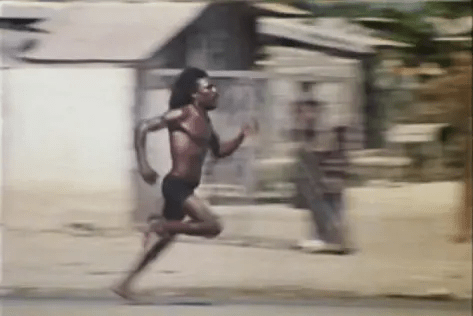
The Harder They Come– While the Jamaican film industry didn’t experience an identifiable “new wave” until the early 80s, Perry Henzel’s 1973 rebel cinema classic laid the foundation. From its opening scene, when wide-eyed country boy Ivan (reggae’s original superstar, Jimmy Cliff) hops off a Jolly Bus in the heart of Kingston to the strains of Cliff’s “You Can Get It If You Really Want”, to a blaze of glory finale, it maintains an ever-forward momentum, pulsating all the while to the heartbeat riddim of an iconic soundtrack. Required viewing!

https://i0.wp.com/digbysblog.net/wp-content/uploads/2023/01/image-16.png?w=474&ssl=1

Rockers– Admittedly, this island-flavored take on the Robin Hood legend is short on plot, but what it may lack in complexity is more than compensated for by its sheer exuberance (and I have to watch it at least once a year). Grecian writer-director Theodoros Bafaloukos appears to have cast every reggae luminary who was alive at the time in his 1978 film. It’s the tale of a Rasta drummer (Leroy “Horsemouth” Wallace) who has had his beloved motorcycle stolen (customized Lion of Judah emblem and all!) by a crime ring run by a local fat cat.

Needless to say, the mon is vexed. So he rounds up a posse of fellow musicians (Richard “Dirty Harry” Hall, Jacob Miller, Gregory Isaacs, Robbie Shakespeare, Big Youth, Winston Rodney, et. al.) and they set off to relieve this uptown robber baron of his ill-gotten gains and re-appropriate them accordingly. Musical highlights include Miller performing “Tenement Yard”, and Rodney warbling his haunting and hypnotic  Rasta spiritual “Jah No Dead” a cappella.

https://i0.wp.com/digbysblog.net/wp-content/uploads/2023/01/image-17.png?w=473&ssl=1

Stepping Razor: Red X– Legalize it! Nicholas Campbell’s unflinching portrait of musician Peter Tosh (who co-founded the Wailers with Bob Marley and Bunny Wailer) is not your typical rockumentary. While there is plenty of music, the  focus is on Tosh’s political and spiritual worldview, rendered via archival footage, dramatic reenactments, and excerpts from a personal audio diary in which Tosh expounds on his philosophies and rages against the “Shitstem. “

One interesting avenue Campbell pursues suggests that Tosh was the guiding force behind the  Wailers, and that Marley looked up to Tosh as a mentor in early days (I suspect that it was more of a Lennon/McCartney dynamic). A definite ‘must-see’ for reggae fans.

https://i0.wp.com/digbysblog.net/wp-content/uploads/2023/01/image-18.png?w=480&ssl=1

Word, Sound, and Power – Jeremiah Stein’s 1980 documentary clocks in at just over an hour but is the best film I’ve seen about roots reggae music and Rastafarian culture. Barely screened upon its original theatrical run and long coveted by music geeks as a Holy Grail until its belated DVD release in 2008 (when I was finally able to loosen my death grip on the sacred, fuzzy VHS copy that I had taped off of USA’s Night Flight back in the early 80s), it’s a wonderful time capsule of a particularly fertile period for the Kingston music scene.

Stein interviews key members of The Soul Syndicate Band, a group of studio players who were the Jamaican version of The Wrecking Crew; they backed Jimmy Cliff, Bob Marley, Burning Spear, and Toots Hibbert (to name but a few). Beautifully photographed and edited, with outstanding live performances by the Syndicate. Musical highlights include “Mariwana”, “None Shall Escape the Judgment”, and a spirited acoustic version of “Harvest Uptown”.

Bonus tracks!

OK …if you’d rather chill, here’s a mixtape. Headphones and munchies on standby:      

Tribeca 2023: One Night With Adela (***)

By Dennis Hartley

(Originally posted on Digby’s Hullabaloo on June 17, 2023)

https://i0.wp.com/digbysblog.net/wp-content/uploads/2023/06/image-66.png?resize=1024%2C576&ssl=1

Volatile, coked to the gills and seething with resentment, Adela (Laura Galán) is wrapping up another dreary late-night shift tooling around Madrid in her street sweeper. However, the young woman’s after-work plans for this evening are anything but typical. She has decided that it’s time to get even…for every wrong (real or perceived) that she’s suffered in her entire life. Galán delivers a fearless and mesmerizing performance. Shot in one take (no editor is credited), writer-director Hugo Ruiz’s debut is the most unsettling portrayal of alienation, rage, and madness I have seen since Gaspar Noe’s I Stand Alone. Definitely not for the squeamish.