Category Archives: Rock ‘n’ Roll

Instant International Film Festival

By Dennis Hartley

(Originally posted on Digby’s Hullabaloo on May 30, 2026)

https://i0.wp.com/digbysblog.net/wp-content/uploads/2023/07/image-27.png?w=650&ssl=1

Ah, Summertime …when the livin’ is easy and the movin’- pitcher Pickens are Slim:

https://i0.wp.com/digbysblog.net/wp-content/uploads/2023/07/box-office.png?resize=1024%2C572&quality=80&ssl=1

Now, I have no personal beef with crowd-pleasing spectacles centering on video game characters, supernatural toys, hitchhiking demons, sheep detectives, the Star Wars universe, the world of high fashion, or the planet of rocky aliens-but if you are in the mood for something more off the beaten path that, you know …isn’t primarily targeting 15 year-old males-summer movie season can be exasperating.

If you are of like mind, no worries. I’ve been covering film festivals for Hullabaloo since 2006. So if you’d rather pass on Indy Jones and satisfy your “indie” Jones instead, I’ve combed the archives and curated a “Best of the Festivals Festival” that you can program from the comfort of your living room (since its acronym is BOFF, I thought it best not to use that as a header).

These 15 fine selections are all available via various platforms. Add popcorn and enjoy!

https://i0.wp.com/digbysblog.net/wp-content/uploads/2023/07/image-29.png?w=758&ssl=1

Another Earth (USA, 2011) – Writer-director Mike Cahill’s auspicious narrative feature debut concerns an M.I.T.-bound young woman (co-scripter Brit Marling) who makes a fateful decision to get behind the wheel after a few belts. The resultant tragedy kills two people, and leaves the life of the survivor, a music composer (William Mapother) in shambles. After serving prison time, the guilt-wracked young woman, determined to do penance, ingratiates herself into the widower’s life (he doesn’t realize who she is). Complications ensue.

Another Earth is a “sci-fi” film mostly in the academic sense; don’t expect to see CGI aliens in 3-D. Orbiting somewhere in proximity of Andrei Tarkovsky’s Solaris, its concerns are more metaphysical than astrophysical. And not unlike a Tarkovsky film, it demands your full and undivided attention. Prepare to have your mind blown.

https://i0.wp.com/digbysblog.net/wp-content/uploads/2023/07/image-30.png?w=993&ssl=1

Bad Black (Uganda, 2016) – Some films defy description. This is one of them. Written, directed, filmed, and edited by Ugandan action movie auteur Nabwana I.G.G.at his self-proclaimed “Wakaliwood studios” (essentially his house in the slums of Wakaliga), it’s best described as Kill Bill meets Slumdog Millionaire, with a kick-ass heroine bent on revenge. Despite a low budget and a high body count, it’s winningly ebullient and self-referential, with a surprising amount of social realism regarding slum life packed into its 68 minutes. The Citizen Kane of African commando vengeance flicks.

https://i0.wp.com/digbysblog.net/wp-content/uploads/2023/07/image-31.png?w=645&ssl=1

Becoming Who I Was (South Korea, 2016) – Until credits rolled for this South Korean entry by co-directors Chang-Yong Moon and Jeon Jin, I was unsure whether I’d seen a beautifully cinematic documentary, or a narrative film with amazingly naturalistic performances. Either way, I experienced the most compassionate, humanist study this side of Ozu.

Turns out, it’s all quite real, and an obvious labor of love by the film makers, who went to Northern India and Tibet to document young “Rinpoche” Angdu Padma and his mentor/caregiver for 8 years as they struggle hand to mouth and strive to fulfill the boy’s destiny (he is believed to have been a revered Buddhist teacher in a past life). A moving journey (in both the literal and spiritual sense) that has a lot to say about the meaning of love and selflessness.

https://i0.wp.com/digbysblog.net/wp-content/uploads/2023/07/image-32.png?w=768&ssl=1

Big Star: Nothing Can Hurt Me (USA, 2012) – Founded in 1971 by singer-guitarist Chris Bell and ex-Box Tops lead singer/guitarist Alex Chilton, the Beatle-esque Big Star was a musical anomaly in their hometown of Memphis, which was only the first of many hurdles this talented band was to face during their brief, tumultuous career. Now considered one of the seminal influences on the power pop genre, the band was largely ignored by record buyers during their heyday (despite critical acclaim from the likes of Rolling Stone).

Then, in the mid-1980s, a cult following steadily began to build around the long-defunct outfit after college radio darlings like R.E.M., the Dbs and the Replacements began lauding them as an inspiration. In this fine rockumentary, director Drew DeNicola also tracks the lives of the four members beyond the 1974 breakup, which is the most riveting (and heart wrenching) part of the tale. Pure nirvana for power-pop aficionados.

https://i0.wp.com/digbysblog.net/wp-content/uploads/2023/07/image-33.png?w=1280&ssl=1

Brian Wilson: Long Promised Road (USA, 2021) – It’s been a long, strange trip for Beach Boys founder/primary songwriter Brian Wilson. After a 2-year streak of hit singles about sun, surf, cars and girls (beginning with the 1963 release of “Surfin’ U.S.A.”), Wilson hit a wall. The pressures of touring, coupled with his experimentation with LSD and his increasing difficulty reconciling the heavenly voices in his head led to a full scale nervous breakdown (first in a series).

Still, he managed to hold the creeping madness at bay long enough to produce the most innovative work of his career (Pet Sounds, in 1966). Wilson’s roller coaster ride was only beginning, with a number of well-documented ups and downs (personal and professional); but his unique creative faculties remained intact. Considering what he has been through, it is amazing Wilson is even alive to tell the tale.

Brent Wilson’s documentary borrows the “Comedians in Cars Getting Coffee” concept, following Rolling Stone editor Jason Fine and Brian Wilson as they cruise around L.A., listening to Beach Boys tunes. Fine gently prompts Wilson to reminisce about the personal significance of various stops along the way. Most locales prompt fond memories; others clearly bring Wilson’s psyche back to dark places he’d sooner forget. What keeps the film from feeling exploitative is the fact that Wilson demonstratively trusts Fine (they are longtime friends). A sometimes sad, but ultimately moving portrait.

https://i0.wp.com/digbysblog.net/wp-content/uploads/2023/07/image-34.png?w=1200&ssl=1

Drunken Birds (Canada, 2021) – Ivan Grbovic’s languidly paced, beautifully photographed culture clash/class war drama (Canada’s 2022 Oscar submission) concerns a Mexican cartel worker who finds migrant work in Quebec while seeking a long-lost love. Grbovic co-wrote with Sara Mishara. Mishara pulls double duty as DP; her painterly cinematography adds to the echoes of Terrence Malick’s Days of Heaven. It also reminded me of Ang Lee’s The Ice Storm; a network narrative about people desperately seeking emotional connection amid a minefield of miscommunication.

https://i0.wp.com/digbysblog.net/wp-content/uploads/2023/07/image-129.png?resize=768%2C432&quality=80&ssl=1

Hacking Hate (Denmark/Norway/Sweden, 2024) – Move over, Lisbeth Salandar…there’s a new hacker in town, and she’s stirring up a hornet’s nest of wingnuts. Simon Klose’s timely documentary follows award-winning Swedish journalist My Vingren as she meticulously constructs a fake online profile, posing as a male white supremacist. Her goal is to smoke out a possible key influencer and glean how he and others fit into right-wing extremist recruiting.

Vingren is like a one-woman Interpol; her investigation soon points her to U.S.-based extremist networks as well, leading her to consult with whistle-blower Anika Collier Navaroli (the former Twitter employee who was instrumental in getting Trump booted off the platform) and Imrab Ahmed (another one of Elon Musk’s least-favorite people, he was sued by the X CEO for exposing the rampant hate speech on the platform).

This isn’t a video game; considering the inherently belligerent nature of the extremist culture she is exposing, Vingren is taking considerable personal risk in this type of investigative journalism (she’s much braver than I am). Especially chilling is the shadowy figure at the center of her investigation, who is like a character taken straight out of a Frederick Forsyth novel.

https://i0.wp.com/digbysblog.net/wp-content/uploads/2023/07/image-35.png?w=1024&ssl=1

Hallelujah: Leonard Cohen, A Journey, A Song (USA/Canada, 2021) – Several years ago, I saw Tom Jones at the Santa Barbara Bowl. Naturally, he did his cavalcade of singalong hits, but an unexpected moment occurred mid-set, when he launched into Leonard Cohen’s “Tower of Song”. Jones’ performance felt so intimate, confessional and emotionally resonant that you’d think Cohen had tailored it just for him. When Jones sang, I was born like this, I had no choice/I was born with the gift of a golden voice, I “got” it. Why shouldn’t Tom Jones cover a Cohen song? I later learned “Tower of Song” has also been covered by the likes of U2, Nick Cave, and The Jesus and Mary Chain.

A truly great song tends to transcend its composer, taking on a life of its own. The reasons why can be as enigmatic as the act of creation itself. In an archival clip in Dan Geller and Dayna Goldfine’s beautifully constructed documentary, the late Cohen muses, “If I knew where songs came from, I’d go there more often.” Using the backstory of his beloved composition “Hallelujah” as a catalyst, the filmmakers take us “there”, rendering a moving, spiritual portrait of a poet, a singer-songwriter, and a seeker.

https://i0.wp.com/digbysblog.net/wp-content/uploads/2023/07/image-128.png?resize=768%2C576&quality=80&ssl=1

I Like Movies (Canada, 2023) – Too call Lawrence (Isaiah Lehtinen), the 17-year-old hero of writer-director Chandler Levack’s coming of age dramedy a “film freak” is an understatement. When his best bud ribs him by exclaiming in mock horror, “I can’t believe you never masturbate!” Lawrence’s responds with a shrug, “I’ve tried to, but…I’d rather watch Goodfellas or something.” Levack’s film (set in the early aughts) abounds with such cringe-inducing honesty; eliciting the kind of nervous chuckles you get from watching, say, Todd Solondz’s Happiness (a film that Lawrence enthusiastically champions to a hapless couple in a video store who can’t decide on what they want to see).

Lawrence, who dresses (and pontificates) like a Canadian version of Ignatius J. Reilly, is obsessed with two things: Paul Thomas Anderson’s oeuvre, and the goal of getting into NYU film school in the fall (despite not even having been accepted yet, and that he’s not likely to save up the $90,000 tuition working as a minimum wage video store clerk over the summer). Wry, observant, and emotionally resonant, with wonderful performances by all.
https://i0.wp.com/digbysblog.net/wp-content/uploads/2023/07/image-36.png?w=1024&ssl=1

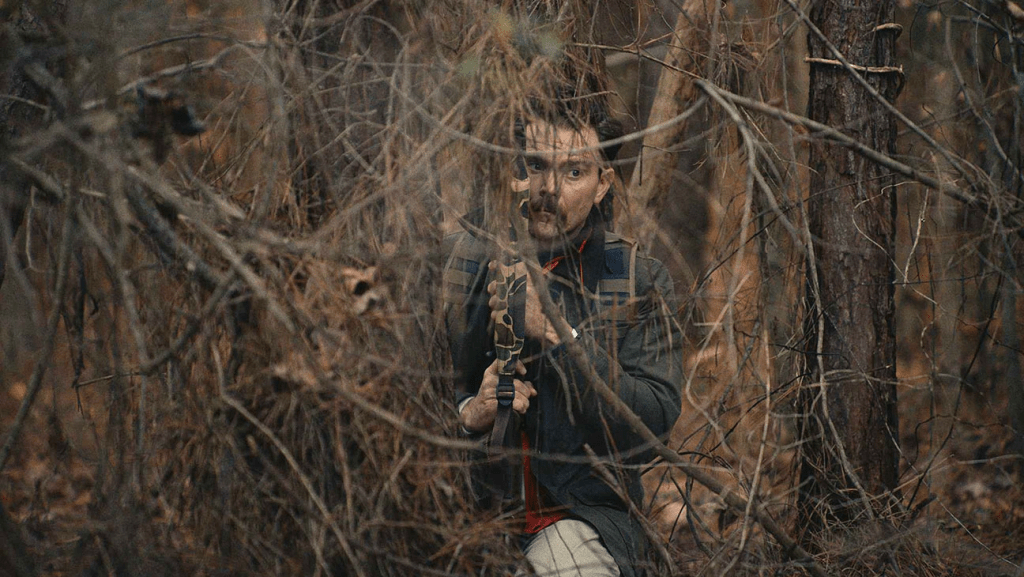
he Integrity of Joseph Chambers (USA, 2022) – This psychological thriller has a slow burn, but really gets under your skin. Early one morning, a white-collar father of two (Clayne Crawford) rolls out of his warm bed and readies himself to go deer hunting. His half-awake (and concerned) wife reminds him he has never gone hunting by himself and has limited experience with firearms. Undeterred, he insists that the best way to get experience is to “just go out and do it.” After stopping at a friend’s house to borrow his pickup truck (and a rifle), he heads for the woods. What could possibly go wrong? Anchored by Crawford’s intense performance, writer-director Robert Machoian has fashioned a riveting tale infused with a dash of Dostoevsky and a dollop of Deliverance.

https://i0.wp.com/digbysblog.net/wp-content/uploads/2023/07/image-37.png?w=1500&ssl=1

The Last Film Show (India, 2021) – Child actor Bhavin Rabari gives an extraordinary performance in writer-director Pan Nalin’s moving drama. Set in contemporary India in 2010, the story centers on Samay, a cinema-obsessed 9-year-old boy who lives with his parents and younger sister. He is frequently beaten by his father, who is embittered by having to support his family as a railway station “tea boy” after losing his cattle farm. He forbids Samay to watch movies unless they are “religious” in nature.

This of course drives Samay to play hooky from school and sneak into the local theater whenever possible. Eventually he befriends the projectionist, who takes Samay on as a kind of protégé, in exchange for the delicious school lunches that Samay’s mother packs for him.

There are obvious parallels with Giuseppe Tornatore’s Cinema Paradiso and Francois Truffaut’s The 400 Blows, but Nalin puts his own unique stamp on a familiar narrative. Gorgeously photographed and beautifully acted, this is a colorful and poetic love letter to the movies.

https://i0.wp.com/digbysblog.net/wp-content/uploads/2023/07/image-38.png?w=1280&ssl=1

Love Spreads (USA/UK, 2020) – I’m a sucker for stories about the creative process, because as far as I’m concerned, that’s what separates us from the animals (even if my “inner Douglas Adams” persists in raising the possibility that “there’s an infinite number of monkeys outside who want to talk to us about this script for Hamlet they’ve worked out.”). Welsh writer-director Jamie Adams’ dramedy is right in that wheelhouse.

“Glass Heart” is an all-female rock band who have holed up Led Zep style in an isolated country cottage to record a follow-up to their well-received debut album. Everyone is raring to go, the record company is bankrolling the sessions, and the only thing missing is…some new songs. The pressure has fallen on lead singer and primary songwriter Kelly (Alia Shawcat) to cough them up, pronto.

Unfortunately, the dreaded “sophomore curse” has landed squarely on her shoulders, and she is completely blocked. The inevitable tensions and ego clashes arise as her three band mates and manager struggle to stay sane as Kelly awaits the Muse. It’s a little bit This is Spinal Tap, with a dash of Love and Mercy-bolstered by a smart script, wonderful performances, and catchy original songs.

https://i0.wp.com/digbysblog.net/wp-content/uploads/2023/07/image-39.png?w=600&ssl=1

Monkey Warfare (Canada, 2006) – Written and directed by Reginald Harkema, Monkey Warfare is a nice little cinematic bong hit of low-key political anarchy. The film stars Don McKellar and Tracy Wright (the Hepburn and Tracy of quirky Canadian cinema) as a longtime couple who are former lefty radical activists-turned “off the grid” Toronto slackers.

When McKellar loans the couple’s free-spirited young pot dealer and budding anarchist (Nadia Litz) his treasured “mint copy” of a book about the Baader-Meinhof Gang, he unintentionally triggers a chain of events that will reawaken long dormant passions between the couple (amorous and political) and profoundly affect the lives of all three protagonists.

Monkey Warfare is not exactly a comedy, but Harkema’s script is awash in trenchant humor. If you liked Jeremy Kagan’s The Big Fix, Sidney Lumet’s Running on Empty, or Paul Thomas Anderson’s One Battle After Another (my review), I think this film should be right in your wheelhouse.

https://i0.wp.com/digbysblog.net/wp-content/uploads/2023/07/image-40.png?resize=1536%2C1020&ssl=1

Nowhere Boy (UK, 2009) – There’s nary a tricksy or false note in this little gem from U.K. director Sam Taylor-Wood. Aaron Johnson gives a terrific, James Dean-worthy performance as a teenage John Lennon. The story focuses on a specific, crucially formative period of the musical icon’s life beginning just prior to his first meet-up with Paul McCartney, and ending on the eve of the “Hamburg period”.

The story is not so much about the Fabs, however, as it is about the complex and mercurial dynamic of the relationship between John, his Aunt Mimi (Kirstin Scott Thomas) and his mother Julia (Anne-Marie Duff). The entire cast is excellent, but Scott Thomas (one of the best actresses strolling the planet) handily walks away with the film as the woman who raised John from childhood.

https://i0.wp.com/digbysblog.net/wp-content/uploads/2023/07/image-41.png?w=768&ssl=1

Polisse (France, 2011) – Winner of the Jury Prize at Cannes in 2011, this is a docudrama-style police procedural in the tradition of Jules Dassin’s Naked City. You do have to pay very close attention, however, because it seems like there are about 8 million stories (and just as many characters) crammed into the 127 minutes of French director Maiwenn’s complex film.

Using a clever “hall of mirrors” device, the director casts herself in the role of a “fly on the wall” photojournalist, and it is through this character’s lens that we observe the dedicated men and women who work in the Child Protective Unit arm of the French police. As you can imagine, these folks are dealing with the absolute lowest of the already lowest criminal element of society, day in and day out, and it does take its psychic toll on them.

Still, there’s a surprising amount of levity sprinkled throughout Maiwenn’s dense screenplay (co-written by Emmanuelle Bercot), which helps temper the heartbreak of seeing children in situations that they would never have to suffer through in a just world. The film fizzles a bit at the end, and keeping track of all the story lines is challenging, but it’s worthwhile, with remarkable performances from the ensemble.

https://i0.wp.com/digbysblog.net/wp-content/uploads/2023/07/image-42.png?w=1280&ssl=1

Settlers (UK, 2021) – Writer-director Wyatt Rockefeller’s sci-fi drama is Once Upon a Time in the West on Mars. The story centers on 9-year-old Remmy (Brooklyn Prince), who lives with her settler parents (Sofia Boutella and Jonny Lee Miller) at a remote homestead. Following an attack by hostile parties and subsequent arrival of a drifter who claims that the homestead rightfully belongs to him, Sofia’s life (as well as the family’s dynamic) changes drastically. The story takes place over a 9-year period; with Nell Tiger Free playing 18-year-old Remmy. Not wholly original, but smartly written and well-acted, with great production design and cinematography (exteriors were filmed in South Africa).

https://i0.wp.com/digbysblog.net/wp-content/uploads/2023/07/image-130-scaled.png?resize=768%2C432&quality=80&ssl=1

Sorry, Baby (USA, 2025) – Mumblecore is alive and well, as evidenced by SIFF’s 2025 Closing Night Gala selection. Written, directed and starring Eva Victor (who you may recognize from Showtime’s Billions) this dramedy is a sometimes meandering but generally affable portrait of an independent young woman’s long recovery in the aftermath of a traumatic betrayal of trust. Victor slowly reveals her character’s arc in episodic fashion, using a non-linear timeline. Solid performances all around in a story that chugs along at the speed of life. The film left me thinking about something Mr. Rogers once said…“Look for the helpers. You will always find people who are helping.” He was right, you know.

https://i0.wp.com/digbysblog.net/wp-content/uploads/2023/07/image-43.png?w=1400&ssl=1

Trollhunter (Norway, 2010) – Like previous entries in the “found footage” sub-genre,  Trollhunter features an unremarkable, no-name cast; but then again you don’t really require the services of an Olivier when most of the dialog is along the lines of “Where ARE you!?”, “Jesus, look at the size of that fucking thing!”, “RUN!!!” or the ever popular “AieEEE!”.

Seriously, though- what I like about Andre Ovredal’s film (aside from the surprisingly convincing monsters) is the way he cleverly weaves wry commentary on religion and politics into his narrative. The story concerns three Norwegian film students who initially set off to do an expose on illegal bear poaching, but become embroiled with a clandestine government program to rid Norway of some nasty trolls who have been terrorizing the remote areas of the country (you’ll have to suspend your disbelief as to how the government has been able to “cover up” 200 foot tall monsters rampaging about). The “trollhunter” himself is quite a character. Not your typical creature feature!

https://i0.wp.com/digbysblog.net/wp-content/uploads/2023/07/image-132.png?resize=768%2C512&quality=80&ssl=1

U Are the Universe (Ukraine, 2025) – As Elton John sang, it’s lonely out in space. Especially if there’s no Earth to come home to. Andriy (Volodymyr Kravchuk) is the pilot on a garbage scow loaded with nuclear waste destined for disposal on one of Jupiter’s moons (it’s just his job, 5 days a week).  When he gleans that the world’s entire population has been wiped out by a cataclysmic event, he’s saddled by the realization he may be the last living human in the universe.

Considering that there is an ample yet finite supply of food on the ship, Andriy has calculated he can survive for a while, but obviously not as long as he would have expected, had the Earth not been destroyed. His growing sense of existential despair is kept somewhat in check by the presence of his onboard AI technical assistant/personality-enhanced companion Maxim, which at least gives him “someone” to interact with.

Then, one day, out of the vacuum, a glimmer of hope. He receives a voice-only communication from a Frenchwoman named Catherine, who tells him she’s the sole occupant of a space station on a collision course with Saturn (she figures she only has a couple weeks before there’s an earth-shattering kaboom). Andriy now has a raison d’être; he immediately sets course for a rescue mission (despite Maxim’s dire warnings about his ship’s limited power reserves).

While this may be familiar territory (with shades of 2001, Solaris, Silent Running, and Miracle Mile), Ukrainian director Pavlo Ostrikov’s film (which was in the midst of wrapping production in Kyiv in 2022 as Putin began sending salvos of missiles into the city) is armed with a smart script, tight direction, a nuanced performance by Kravchuk, and a beautiful statement on love, compassion and self-sacrifice-adding up to one of the best genre entries I’ve seen in some time.

https://i0.wp.com/digbysblog.net/wp-content/uploads/2023/07/image-131.png?resize=768%2C390&quality=80&ssl=1

Waves (Czech Republic, 2025) – While it is set on the eve of the 1968 Prague Spring in Czechoslovakia, in some respects writer-director Jiří Mádl’s riveting political thriller could have been ripped from today’s headlines.

In 1967 Prague, a young man named Tomás (Vojtěch Vodochodský) lives in a cramped apartment with his younger brother Paja (Ondřej Stupka). Tomás is Paja’s legal guardian. The conservative and apolitical Tomás is concerned about rebellious Paja’s increasing involvement with an anti-regime activist group. One day, he is chagrined to learn that Paja has sneaked off to an open audition for a job as an assistant to a popular but controversial radio journalist. Tomás rushes down to the station to intervene, but stumbles into landing the gig himself.

While he cannot foresee it, Tomás is about to get swept up into the vortex of tumultuous political upheaval in his country, culminating in the August 1968 invasion of Czechoslovakia by Soviet and Warsaw Pact forces (the film is based in part on the rousing story of how Czech Radio managed to keep broadcasting, even after Soviet troops forced their way in and seized control of the main studios).

Waves plays like a mashup of Three Days of the Condor and The Unbearable Lightness of Being, and is a welcome throwback to films that hit that sweet spot between historical sweep and intimate drama. Oh, and don’t forget to support your favorite independent journalists, because democracy dies in…well, you know. Full review

SIFF 2026: Radioheart: The Drive and Times of DJ Kevin Cole (***)

By Dennis Hartley

(Originally posted on Digby’s Hullabaloo on May 16, 2026)

https://i0.wp.com/digbysblog.net/wp-content/uploads/2026/05/image-153.png?resize=768%2C432&quality=80&ssl=1

First, full disclosure…from my 2008 review of The Gits:

In the fall of 1992, I moved to Seattle with no particular action plan, and stumbled into a job hosting the Monday-Friday morning drive show on KCMU (now KEXP) , a mostly volunteer, low-wattage, listener supported FM station broadcasting from the UW campus with the hopeful slogan: “Where the music matters.” I remember joking to my friends that my career was going in reverse order, because after 18 years of commercial radio experience, here I was at age 36, finally getting my first part-time college radio gig. I loved it. […]

What I didn’t realize until several years following my 7-month stint there, is that KCMU was semi-legendary in college/alt-underground circles; not only was it literally the first station in the country to “break” Nirvana, but counted members of Mudhoney and Pearl Jam among former DJ staff. I was just a music geek, enthusiastically exploring somebody else’s incredibly cool record collection, whilst taking my listeners along for the ride; in the meantime I obliviously became a peripheral participant in Seattle’s early 90’s “scene”.

And now, I find myself in 2026, writing a review of a documentary about the 25-year tenure of a popular KEXP DJ who started his gig at my old alma mater 7 years after my stint (even on a good day, Time is cruel).

Peter Hilgendorf and Andrew Franks co-directed this absorbing portrait of KEXP’s longtime afternoon drive host Kevin Cole. I’ve often tuned in to his show over the years and enjoyed his knowledgeable, laid-back on-air persona and thoughtful music curation, but had no inkling of his fascinating backstory.

As it turns out, Cole is like the Zelig of alt-music, starting with his involvement in the Minneapolis underground nightclub scene in the ’70s. More specifically, he was a popular house DJ at the legendary First Avenue, right at the time Prince was first making his mark at the venue (in the film, Cole recalls the time the artist shyly approached him at the club and asked him to DJ one of his house parties).

In 1994, Cole was one of the founders of the short-lived but highly influential “REV105”, a Twin Cities-based alternative music FM station. It was a “commercial” radio station, but its programming philosophy was closer in spirit to the free-form, music community-oriented “underground” FM stations that flourished in the late 60s and early 70s. When he moved to Seattle in the early 2000s, he briefly worked for Amazon music.

What emerges is an inspiring portrait of someone whose enthusiasm for discovering and sharing new music is showing no signs of waning. And it’s particularly heartening to learn that rumors about the death of true community radio have been greatly exaggerated.

Tickling the ivories and prickling the authorities: The Session Man (***) & One to One (***1/2)

By Dennis Hartley

(Orginally posted on Digby’s Hullabaloo on November 15, 2025)

https://i0.wp.com/digbysblog.net/wp-content/uploads/2025/11/Getty_NickyHopkins2000_101624.webp?w=833&quality=80&ssl=1

Better late than never, I suppose. I was happy to learn that the Rock and Roll Hall of Fame finally got around to acknowledging keyboard legend Nicky Hopkins in last week’s induction ceremonies. One could argue that Hopkins (who died in 1994 at age 50 from surgical complications ) was more a “legend” to peers and musos than to the public at large.

That said, his distinctive flourishes added essential color to classics like “Revolution” by The Beatles, “The Song is Over” and “Getting in Tune” by The Who, “She’s a Rainbow”, “Street Fighting Man”, and “Angie” by The Rolling Stones, “You Are So Beautiful” by Joe Cocker, “Imagine” by John Lennon, and “Wooden Ships” by The Jefferson Airplane, to name a few.

Hopkins also did session work on albums by George Harrison, Paul McCartney, Ringo Starr, The Kinks, Cat Stevens, Donovan, Martha Reeves, Peter Frampton, Art Garfunkel, Harry Nilsson, Jennifer Warnes, Graham Parker, et. al., appearing on over 250 albums, all told.

Despite such a busy schedule, he managed to shoehorn in a few official band memberships, most notably with The Jeff Beck Group and The Quicksilver Messenger Service, as well as more short-lived stints with The Jefferson Airplane (performing with them at Woodstock), The Steve Miller Band, New Riders of the Purple Sage, and the one-off supergroup Sweet Thursday (which also featured future Mark-Almond Band vocalist Jon Mark). He also released 3 solo albums; his excellent 1973 effort The Tin Man Was a Dreamer is ripe for rediscovery.

And now Hopkins has received an additional “better late than never” nod, courtesy of Mike Treen’s documentary portrait The Session Man: The story of Nicky Hopkins (opening in UK cinemas November 21, and available now in the U.S. as a pay-per-view watch on various streaming platforms including Amazon Prime, Google Play, VUDU, and Apple TV).

Treen takes a fairly by-the-numbers approach in this low-budget but affable affair, narrated by longtime, dulcet-voiced BBC presenter “Whispering” Bob Harris (a bit of a legend himself). Interviewees include Bill Wyman, Keith Richards, Mick Jagger, Dave Davies, Pete Townshend, Jorma Kaukonen, Terry Reid, Peter Frampton, Heartbreakers keyboardist Benmont Tench, Graham Parker, and Harry Shearer (yes-Hopkins even played on a Spinal Tap album!).

Hopkins’ widow Moira speaks quite movingly of his bouts with substance addiction (which he eventually beat) and lifelong health struggles (his chronic Crohn’s disease played a large part in his untimely passing). Also sprinkled throughout are archival interview snippets with Hopkins, as well as performance clips (although I wish there had been more of the latter). All in all, I think fans should be pleased and Hopkins neophytes intrigued enough to take a deeper dive into his catalogue.

https://i0.wp.com/digbysblog.net/wp-content/uploads/2025/11/0x0.webp?fit=1024%2C576&quality=80&ssl=1&resize=640%2C360&_jb=custom

In my review of the 2025 documentary Borrowed Time: Lennon’s Last Decade, I wrote:

I’ll never forget the first time I saw Billy Wilder’s Sunset Boulevard-although I wish I could.

Allow me to explain.

I was all of 24, living in San Francisco. I didn’t own a VCR (they were exorbitantly priced), so I was still watching the tube in (*shudder*) real time. Perusing the TV Guide one December evening, I was excited to spot  Sunset Boulevard on the schedule for 8pm (I believe it was airing on independent Bay Area station KTVU).

For the uninitiated, Gloria Swanson’s turn as a fading, high-maintenance movie queen mesmerizes, William Holden embodies the quintessential noir sap, and veteran scene-stealer Erich von Stroheim redefines the meaning of “droll” in a tragicomic journey down the Boulevard of Broken Dreams (I’ve seen it many times since).

At any rate, I was comfortably ensconced on the couch, really digging the film (despite myriad commercial breaks). Approximately 20 minutes into the broadcast, the station unceremoniously cut away from the film for a news bulletin: former Beatle John Lennon had been shot and killed in New York City.

It was eerie kismet, as the film opens with the shooting death of the protagonist/narrator (played by Holden), and is ultimately a rumination on the dark side of fame.

Being an avid Fabs fan, it kind of harshed my mellow. Still does, actually-whenever the subject comes up.

It’s hard to believe that was 45 years ago (5 years longer than Lennon’s lifespan). Over the ensuing decades, there has certainly been no shortage of documentaries and biopics covering Lennon’s life and work. At this point, I think I’ve seen most of them.

Consequently, one would assume that there are very few secrets, revelations and angles left to explore. Yet, 2025 has seen the release of no less than two new Lennon documentaries (and the year is still young).

Now that the year is not so young (where does the time go?), and I’ve had an opportunity to screen One to One: John & Yoko (which had its HBO/MAX premiere November 14), I can share a few thoughts on yet another documentary about John & Yoko (enough already!).

Well I’ll be damned if co-directors Kevin Macdonald (One Day in September, The Last King of Scotland, Touching the Void, State of Play, Marley) and Sam Rice-Edwards haven’t assembled a fresh and absorbing take on an oft-told tale…but perhaps not for the reasons you may think.

Using beautifully restored performance footage from John and Yoko’s 1972 Madison Square Garden concert (a benefit for the children who were institutionalized at Staten Island’s Willowbrook facility) as a framing device, Macdonald and Edwards’ film is essentially an encapsulation of the intense sociopolitical turmoil in America from 1971-1973.

This time window encompassed an 18-month period when John and Yoko lived in a small Greenwich Village apartment, which coincided with their increasing political activism (which ultimately got them into hot water with the Nixon administration). Most of the “new” footage concerns John and Yoko’s behind the scenes plans for their “Free the People” tour, which was scrapped after a falling out with Jerry Rubin. The impetus for the 1972 Willowbrook benefit was a TV report by Geraldo Rivera on the shocking conditions in the children’s ward (believe it or not, there was a time when Geraldo was a real journalist).

On a more personal note, 1971-1973 also encompassed my high school years (I graduated in May of 1974), and watching the film triggered memories of witnessing mayhem and discord on Walter Cronkite’s nightly broadcast…images of police beating the shit out of protestors just a couple years my senior, the Attica prison massacre, hijackings, horrific scenes from Vietnam, and the emerging Watergate scandal as Nixon took office for a second term (is it any wonder many of us “of a certain age” entered adulthood with such a cynical worldview?).

The most unexpected takeaway from the documentary were the spooky parallels between then and now, vis a vis the political climate. The massive street protests against Nixon’s reactionary administration (No Kings, anyone?), the tribalism of “hardhats” (essentially the MAGAs of their day) vs. the antiwar protestors (“radical Leftist Democrats!”), footage of George Wallace from a 1972 presidential campaign speech where he goes off on a race-baiting diatribe about how Washington D.C. is (in so many words) a crime-ridden hellhole (sound familiar?).

The icing on the cake is when Nixon sics his justice department on John and Yoko and begins building a case for deportation, essentially as retaliation for their political activism . I mean, could you imagine that kind of thing happening in America in 2025?! Oh, wait…

(One to One: John & Yoko is now on the HBO schedule and available on-demand from MAX)

Blu-ray reissue: Slade in Flame (***)

By Dennis Hartley

(Originally posted on Digby’s Hullabaloo on September 27, 2025)

https://i0.wp.com/digbysblog.net/wp-content/uploads/2025/09/1425.webp?fit=1024%2C615&quality=80&ssl=1&resize=640%2C385&_jb=custom

Slade in Flame (BFI; Region ‘B’ only)

Akin to Mott the Hoople, it may be arguable among music geeks as to whether Slade was truly “glam” (they were a bit on the “blokey” side- as the Brits would say), but they are nonetheless considered so in some circles, and this 1974 film was released during the heyday of space boots and glitter, so there you go.

The directorial debut for Richard Loncraine (Brimstone and Treacle, The Missionary, Richard III) the film is a gritty, semi-biographical “behind the music” drama (don’t expect A Hard Day’s Night) about a working-class band called Flame (suspiciously resembling the four members of Slade, wink-wink) who get chewed up and spit out of the star-making machine (this just in: managers and A & R people are back-stabbing weasels).

It’s admittedly not a genre masterpiece, but the film is bolstered by a great soundtrack (all Slade originals, naturally) and the casting of Tom Conti (playing a soulless record exec with great aplomb). An amusing scene where lead singer Noddy Holder’s character gets locked into a stage coffin presages a similar hardware malfunction depicted in This Is Spinal Tap. Another memorable scene has the band risking life and limb to access the broadcast booth for an on-air interview at an offshore pirate radio station (the story is set in the late 60s).

BFI’s 2025 remastered Blu-ray edition is a vast improvement over Shout! Factory’s 2004 DVD, in both image and sound quality. Extras include a newly recorded audio commentary with the director and film critic Mark Kermode, a new 9-minute interview with Tom Conti, a 54-minute 2002 interview with Noddy Holder, and more. Note: Requires an all-region player.

Blu-ray reissue: Breaking Glass (***1/2)

By Dennis Hartley

(Originally posted on Digby’s Hullabaloo on September 27, 2025)

https://i0.wp.com/digbysblog.net/wp-content/uploads/2025/09/2-b2ec20a9547228bd94e916691820e3a5.jpg?resize=1024%2C576&quality=89&ssl=1

Breaking Glass (Fun City Editions)

Released on the cusp of the Thatcher era, writer-director Brian Gibson’s 1980 film is a No Wave take on A Star is Born, with a nod to the classic UK kitchen sink dramas of the 1960s. 26 year-old singer-songwriter Hazel O’Connor delivers a naturalistic performance as a disenfranchised young gas station attendant who aspires to be a rock star…but strictly on her own terms. To wit, the lyrics she furiously scribbles into her notebook are not exactly “moon-June” love sonnets; take “Big Brother”, for instance:

They’ll tear out your heart, throw it knee-deep in a cart
Cause that’s what they do with the scum like me and you
And you feel as if you died, whilst you’re standing on the line
And you wonder all the time why can’t you cry?
But the people in control don’t care for you
They are just a robot with a job to do
And when your used, exhausted, they’ll be rid of you
As soon as look at you, go to the back of the queue!

Not destined to be a chart-climber, that one. Despite the ridicule and sexism she constantly weathers, she eventually gets the attention of a street-hustling manager (Phil Daniels) who sees her potential and helps her put a decent band together (including a young Jonathan Pryce on sax). However, when she lands a recording contract, the inevitable compromises begin once a more seasoned, smooth-talking (and weaselly) industry exec (Jon Finch) begins to wrest control of her career (let the eternal battle between Art and Commerce commence).

O’Connor does her own singing (she also co-wrote the songs with soundtrack producer Tony Visconti). I see the film as a companion piece to Lou Adler’s 1981 Ladies and Gentlemen, the Fabulous Stains and Gillian Armstrong’s 1982 rock musical Starstruck (I wrote about both films here).

Fun City’s 2025 edition is a bit light on extras, but boasts a long-overdue restoration, improved audio, and (most notably) reinstates the original UK cut (the previous Olive Films reissue was not restored, and featured the U.S. cut, which is 10 minutes shorter).

Blu-ray reissue: This is Spinal Tap (****)

By Dennis Hartley

(Originally posted on Digby’s Hullabaloo on September 27, 2025)

https://i0.wp.com/digbysblog.net/wp-content/uploads/2025/09/TzxUG6bassczZyWgixsNh2WgfAcp2q_original.jpg?resize=1024%2C576&quality=89&ssl=1

This is Spinal Tap (The Criterion Collection)

“May I start by saying how thrilled we are to have you here. We are such fans of your music and all of your records. I’m not speaking of yours personally, but the whole genre of the rock and roll.”

– Lt. Hooksratten (played by Fred Williard), from This is Spinal Tap

Has it really been 41 years since one of the loudest English bands that never lived set off to “tap into America” on their imaginary comeback tour? (Checks calendar) Yes, that tracks. Director Rob Reiner co-wrote this 1984 mockumentary with Christopher Guest, Harry Shearer and Michael McKean, who play Spinal Tap founders Nigel Tufnel (lead guitar), Derek Smalls (bass) and David St. Hubbins (lead vocals and guitar), respectively (several actors portray the band’s revolving door of drummers, who tend to meet untimely ends such as spontaneous combustion, “a bizarre gardening accident”, and perhaps most famously, choking on “somebody else’s vomit”).

Reiner casts himself as “rockumentary” filmmaker Marty DiBergi (a goof on Martin Scorsese, who similarly interjected himself into The Last Waltz) who accompanies the hard rocking outfit on a tour of the states (“their first in six years”) to support the release of their new LP “Smell the Glove” (DiBergi has been a fan since first catching them at the “Electric Banana” in Greenwich Village in 1966).

By the time the film’s 84 minutes have expired, no one (and I mean, no one) involved in the business of rock ’n’ roll has been spared the knife-musicians, roadies, girlfriends, groupies, fans, band managers, rock journalists, concert promoters, record company execs, A & R reps, record store clerks…all are bagged and tagged.

Nearly every scene has become iconic in muso circles; ditto the plethora of quotable lines: “These go to eleven.” “I mean, it’s not your job to be as confused as Nigel.” “You can’t really dust for vomit.” “It’s such a fine line between stupid and clever.” “No…we’re NOT gonna fucking do ‘Stonehenge’!” “We’ve got armadillos in our trousers-it’s really quite frightening.”

The great supporting cast includes Tony Hendra (who steals all his scenes as the band’s prickly manager, clearly modeled after Led Zeppelin’s infamously fearsome handler Peter Grant), Bruno Kirby, Ed Begley, Jr., Fran Drescher, Parick Macnee, June Chadwick, Billy Crystal (“C’mon…mime is money!”), Howard Hesseman, Paul Shaffer, and Fred Williard.

Third time’s a charm for Criterion, who released previous editions on LaserDisc and DVD. The label does their usual voodoo with a sparkling new 4K transfer (supervised and approved by director Reiner) and 5.1 Surround DTS MasterAudio (“Big Bottom”, “Hell Hole”, and “Sex Farm” have never sounded so…robust).

Extras include an engaging conversation between Rob Reiner and Spinal Tap superfan Patton Oswalt, three audio commentaries, media appearances, trailers, and music videos. The 90 minutes of outtakes is a real treat for fans of the film; when you see the quality of what ended up on the cutting room floor, you marvel even more at the cast’s improvisational skills (Reiner had 100 hours of footage to pare down).

Like we did last summer: Top 20 Rock Musicals

By Dennis Hartley

(Originally posted on Digby’s Hullabaloo on July 5, 2025)

https://i0.wp.com/digbysblog.net/wp-content/uploads/2024/07/rnrhs1_newworldpictures.jpg?w=1200&quality=89&ssl=1

Ah, July 4th weekend. Nothing kicks off Summer like an all-American holiday that encourages mass consumption of animal flesh (charcoal-grilled to carcinogenic perfection), binge drinking, and subsequent drunken handling of explosive materials. Well, for most people. Being the semi-reclusive weirdo that I am (although I prefer the term “gregarious loner”), nothing kicks off summer for me like holing up for the holiday weekend with an armload of my favorite rock ‘n’ roll musicals. For your consideration (or condemnation) here are my Top 20. Per usual, I present them in no ranking order. For those about to rock…I salute you.

American Pop – Within the realm of animated films, Ralph Bakshi’s name may not be as universally recognizable (or revered) as Walt Disney or Studio Ghibli, but I would consider him no less of an important figure in the history of the genre. During his heyday (1972-1983) the director pumped out 8 full-length feature films (Fritz the Cat, Heavy Traffic, Wizards, et. al.) using his signature blend of live-action, rotoscoping, and  traditional cel animation.

In his 1981 film American Pop, director Bakshi  and screenwriter Ronni Kern ambitiously attempt to distill the history of 20th Century American popular music (essentially from Vaudeville to Punk) in 90 minutes. The narrative is framed via the triumphs and travails of four generations of a Russian-Jewish immigrant family (all of whom are involved one way or the other in the music business). Intelligently written, beautifully animated, with an eclectic soundtrack (everything from “Swanee” to “Pretty Vacant”).

Bandwagon – A taciturn musician, still reeling from a recent breakup with his girlfriend, has a sudden creative spurt and forms a garage band. The boys pool resources, buy a beat-up van (the “Band” wagon, get it?) and hit the road as Circus Monkey. The requisite clichés ensue: The hell-gigs, backstage squabbles, record company vultures, and all that “art vs commerce” angst; but John Schultz’s crisp writing and directing and mostly unknown cast carry the day.

Indie film stalwart Kevin Corrigan stands out, as does Chapel Hill music scene fixture Doug McMillan (lead singer of The Connells) as a Zen-like road manager (the director is one of McMillan’s ex-band mates). The original soundtrack is an excellent set of power-pop (you’ll have “It Couldn’t Be Ann” in your head for days). Anyone who has been a “weekend rock star” will recognize many of the scenarios; any others who apply should still be quite entertained.

The Commitments – “Say it leoud. I’m black and I’m prewd!” Casting talented yet unknown actor/musicians to portray a group of talented yet unknown musicians was a stroke of genius by director Alan Parker. This “life imitating art imitating life” trick works wonders. In some respects, The Commitments is an expansion of Parker’s 1980 film Fame; except here the scenario switches from New York to Dublin (there’s a bit of a wink in a scene where one of the band members breaks into a parody of the Fame theme).

However, these working-class Irish kids don’t have the luxury of attending a performing arts academy; there’s an undercurrent referencing the economic downturn in the British Isles. The acting chemistry is superb, but it’s the musical performances that shine, especially from (then) 16-year old Andrew Strong, who has the soulful pipes of someone who has been smoking 2 packs a day for decades. In 2007, cast member/musician Glen Hansard co-starred in John Carney’s surprise low-budget hit, Once, a lovely character study that would make a perfect double bill with The Commitments.

Dance Craze – In the book Reggae International, a collection of essays compiled by Stephen Davis and Peter Simon, sub-culturalist Dick Hebdige writes about the UK’s short-lived yet highly influential “2-tone” movement of the early 1980s:

Behind the fusion of rock and reggae lay the hope that the humour, wit, and style of working-class kids from Britain’s black and white communities could find a common voice in 2-tone; that a new, hybrid cultural identity could emerge along with the new music. The larger message was usually left implicit. There was nothing solemn or evangelical about 2-tone. It offered an alternative to the well-intentioned polemics of the more highly educated punk groups, who tended to top the bill at many of the Rock Against Racism gigs. […]

Instead of imposing an alienating, moralising discourse on a popular form (alien at least to their working-class constituency), bands like the Specials worked in and on the popular, steered clear of the new avant-gardes, and stayed firmly within the “classical” definitions of 50s and early 60s rock and pop: that this was music for Saturday nights, something to dance to, to use.

In 1981, a concert film called Dance Craze was released. Shot in 1980 and directed by Joe Massot (The Song Remains the Same), it was filmed at several venues, showcasing six of the most high-profile bands in the 2 Tone Records stable: Bad Manners, The English Beat, The Bodysnatchers, Madness, The Selector, and The Specials.

I’d heard about this Holy Grail, but it was a tough film to catch; outside of its initial theatrical run in the UK (and I’m assuming very limited engagements here in the colonies) it had all but vanished in the mists of time…until a 2024 restoration and re-release of the film.

This film is nirvana for genre fans; all six bands are positively on fire (this is music for Saturday nights-I guarantee you’ll be dancing in your living room).  Thanks to cinematographer Joe Dunton’s fluid “performer’s-eye view” camerawork and tight editing by Ben Rayner and Anthony Sloman, you not only feel like you are on stage with the band, but you get a palpable sense of the energy and enthusiasm feeding back from the audience.

Expresso Bongo– This 1959 British gem from Val Guest undoubtedly inspired Julien Temple’s Absolute Beginners– from the opening tracking shot giddily swooping through London’s Soho district coffee bar/music club milieu, to its narrative about naive show biz beginners with stars in their eyes and exploitative agents’ hands in their wallets. Laurence Harvey plays his success-hungry hustler/manager character with chutzpah. The perennially elfin Cliff Richard plays it straight as Harvey’s “discovery”, Bongo Herbert.

The film includes performances by the original Shadows (Richards’ backup band), featuring guitar whiz Hank Marvin (whom Jeff Beck and Jimmy Page have cited as a seminal influence). The smart, droll screenplay (by Julian More and Wolf Mankowitz) is far more sophisticated than most of the U.S. produced rock’ n ’roll musicals of the era (films like The Girl Can’t Help It and Rock Rock Rock do feature priceless performance footage, but the story lines are dopey).

A Hard Day’s Night– This 1964 masterpiece has been often copied, but never equaled. Shot in a semi-documentary style, the film follows a “day in the life” of John, Paul, George and Ringo at the height of their youthful exuberance and charismatic powers. Thanks to the wonderfully inventive direction of Richard Lester and Alun Owen’s cleverly tailored script, the essence of what made the Beatles “the Beatles” has been captured for posterity.

Although it’s meticulously constructed, Lester’s film has a loose, improvisational feel; and it feels just as fresh and innovative as it was when it first hit theaters all those years ago. To this day I catch subtle gags that surprise me (ever notice John snorting the Coke bottle?). Musical highlights: “I Should Have Known Better”, “All My Loving”, “Don’t Bother Me”, “Can’t Buy Me Love”, and the fab title song.

Hedwig and the Angry Inch – It’s your typical love story. A German teen named Hansel (John Cameron Mitchell) falls for a G.I., undergoes a less than perfect sex change so they can marry, and ends up seduced and abandoned in a trailer park somewhere in Middle America. The desperate Hansel opts for the only logical way out…he creates an alter-ego named Hedwig, puts a glam-rock band together, and sets out to conquer the world. How many times have we heard that tired tale?

But seriously, this is an amazing tour de force by Mitchell, who not only acts and sings his way through this entertaining musical like nobody’s business, but directed and co-wrote (with composer Steven Trask, with whom he also co-created the original stage version).

Help! – Compared to its predecessor (see above), this is a much fluffier affair, from a narrative standpoint (Ringo is being chased by a religious cult who wish to offer him up as a human sacrifice to their god; hilarity ensues). But still, it’s a lot of fun, if you’re in a receptive mood. The Beatles themselves exude enough goofy energy and effervescent charm to make up for the wafer-thin plot line.

Marc Behm and Charles Wood’s script has a few good zingers; but the biggest delights come from director Richard Lester’s flair for visual invention. For me, the best parts are the musical sequences, which are imaginative, artful, and light years ahead of their time (essentially the blueprint for MTV, which was still 15 years down the road).

And of course, the Beatles’ music was evolving in leaps and bounds by 1965. It has a killer soundtrack; in addition to the classic title song, you’ve got “Ticket to Ride”, “You’ve Got to Hide Your Love Away”, “The Night Before” and “I Need You”, to name a few. Don’t miss the clever end credits!

Jailhouse Rock-The great tragedy of Elvis Presley’s film career is how more exponentially insipid each script was from the previous one. Even the part that mattered the most (which would be the music) progressively devolved into barely listenable schmaltz (although there were flashes of brilliance, like the ’69 Memphis sessions).

Fortunately, however, we can still pop in a DVD of Jailhouse Rock, and experience the King at the peak of his powers before Colonel Parker took his soul. This is one of the few films where Elvis actually gets to breathe a bit as an actor (King Creole is another example).

Although he basically plays himself (an unassuming country boy with a musical gift from the gods who becomes an overnight sensation), he never parlayed the essence of his “Elvis-ness” less self-consciously before the cameras as he does here. In addition to the iconic “Jailhouse Rock” song and dance number itself, Elvis rips it up with “Treat Me Nice” and “(You’re So Square) Baby I Don’t Care”.

Ladies and Gentlemen, the Fabulous Stains A punk version of A Star is Born. This 1981 curio (initially shelved from theatrical distribution) built a cult base, thanks to showings on USA Network’s Night Flight back in the day. As a narrative, this effort from record mogul turned movie director Lou Adler would have benefited from some script doctoring (Slap Shot screenwriter Nancy Dowd is off her game here) but for punk/new wave nostalgia junkies, it’s still a great time capsule.

Diane Lane plays a nihilistic mall rat who breaks out of the ‘burbs by forming an all-female punk trio with her two cousins (played by Marin Kanter and then-15 year-old Laura Dern). They dub themselves The Stains. Armed with a mission statement (“We don’t put out!”) and a stage look possibly co-opted from Divine in Pink Flamingos, this proto-riot grrl outfit sets out to conquer the world (and learn to play their instruments along the way).

Music biz clichés abound, but it’s a guilty pleasure, due to real-life rockers in the cast. Fee Waybill and Vince Welnick of The Tubes are a hoot as washed up glam rockers. The fictional punk band, The Looters (fronted by an angry young Ray Winstone) features Paul Simonon from The Clash and Steve Jones and Paul Cook of the Sex Pistols.

The Phantom of the Paradise – To describe writer-director Brian DePalma’s 1974 horror schlock-rock musical take-off on The Phantom of the Opera as “over the top” would be understatement.

Paul Williams (who composed the memorable soundtrack) chews all the available scenery as ruthless music mogul “Swan”, a man with a curious predilection for insisting his artists sign their (somewhat long-term) contracts in blood. One who becomes so beholden is Winslow (William Finely) a talented composer hideously disfigured in a freak accident (and that’s only the least of his problems). Jessica Harper plays the object of poor Winslow’s unrequited desire, who is slowly falling under Swan’s evil spell.

Musical highlights include the haunting ballad “Old Souls” (performed by Harper, who has a lovely voice) and “Life at Last”, a glam rock number performed by “The Undead”, led by a scene-stealing Gerrit Graham camping it up as the band’s lead singer “Beef”.

Quadrophenia –The Who’s eponymous 1973 double-LP rock opera, Pete Towshend’s musical love letter to the band’s first g-g-generation of most rabid British fans (aka the “Mods”) inspired this 1979 film from director Franc Roddam. With the 1964 “youth riots” that took place at the seaside resort town of Brighton as catalyst, Roddam fires up a visceral character study in the tradition of the British “kitchen sink” dramas that flourished in the early 1960s.

Phil Daniels gives an explosive, James Dean-worthy performance as teenage “Mod” Jimmy. Bedecked in their trademark designer suits and Parka jackets, Jimmy and his Who (and ska)-loving compatriots cruise around London on their Vespa and Lambretta scooters, looking for pills to pop, parties to crash and “Rockers” to rumble with. The Rockers are identifiable by their greased-back hair, leathers, motorbikes, and their musical preference for likes of Elvis and Gene Vincent.

Look for a very young (and much less beefier) Ray Winstone (as a Rocker) and Sting (as a Mod bell-boy, no less). Wonderfully acted by a spirited cast, it’s a heady mix of youthful angst and raging hormones, supercharged by the power chord-infused grandeur of the Who’s music.

Rock and Roll High School – In this 1979 cult favorite from legendary “B” movie producer Roger Corman, director Alan Arkush evokes the spirit of those late 50s rock’ n’ roll exploitation movies (right down to having 20-something actors portraying “students”), substituting The Ramones for the usual clean-cut teen idols who inevitably pop up at the prom dance.

I’m still helplessly in love with P.J. Soles, who plays Vince Lombardi High School’s most devoted Ramones fan, Riff Randell. The great cast of B-movie troupers includes the late Paul Bartel (who directed several of his own films under Corman’s tutelage) and Mary Waronov (hilarious as the very strict principal.) R.I.P. Joey, Dee Dee, Johnny and Tommy.

The Rocky Horror Picture Show– The decades have not diminished the cult appeal of Jim Sharman’s film adaptation of Richard O’Brien’s original stage musical about a hapless young couple (Barry Bostwick and Susan Sarandon) who stumble into the lair of one Dr. Frank-N-Furter (Tim Curry) one dark and stormy night.

Much singing, dancing, cross-dressing, axe-murdering, cannibalism and hot sex ensues-with broad theatrical nods to everything from Metropolis, King Kong and Frankenstein to cheesy 1950s sci-fi, Bob Fosse musicals, 70s glam-rock and everything in between. Runs out of steam a bit in the third act, but with such spirited performances (and musical numbers) you won’t notice. O’Brien co-stars as the mad doctor’s hunchbacked assistant, Riff-Raff.

Stardust – Michael Apted directed this 1974 sequel to Claude Whatham’s 1973 film That’ll Be the Day. David Essex reprises his role as restless seeker Jim MacLaine, who has finally found his true passion: music.

The first third traces MacLaine’s  Beatle-like rise to fame with his beat combo “The Stray Cats” (it’s a safe bet Brian Setzer and band mates saw this film back in the day and “re-appropriated” the name).

With massive success comes the inevitable backstage squabbles and jealousies; eventually MacLaine is surrounded by music company weasels and yes-men whispering in his ear to dump his “backup” band and pursue a solo career as a rock god (who can say “no” to that?). Then comes the inevitable decline: too much drugs, sex and rock ‘n’ roll excess.

One of the best (and most realistic) films ever made about the music business. Clever casting of a number of veteran UK rockers like Adam Faith, Dave Edmunds, Keith Moon, Marty Wylde and Paul Nicholas adds greatly to the authenticity.

Starstruck-Gillian Armstrong primarily built her rep on female empowerment dramas like My Brilliant Career, Mrs. Soffel, High Tide, The Last Days of Chez Nous and Charlotte Gray; making this colorful, sparkling and energetic 1982 trifle an anomaly in the Australian director’s oeuvre. But it’s a lot of fun-and I’ve watched it more times than I’d care to admit.

It does feature a strong female lead , free-spirited Jackie (Jo Kennedy) who aspires to be Sydney’s next new wave singing sensation, with the help of her kooky, entrepreneurial-minded (and frequently truant) teenage cousin Angus (Ross O’Donovan) who has designated himself as publicist/agent/manager. Goofy, high-spirited and filled to the brim with catchy power pop (with contributions from members of Split Enz and Mental as Anything). Musical highlights include “I Want to Live in a House” and “Monkey in Me”.

Still Crazy– Q: What do you call a musician without a girlfriend? A: Homeless! If that old chestnut still makes you chortle, then you will “get” this movie. Painting a portrait of an “almost great” 70’s British band reforming for a 90’s reunion tour, Brian Gibson’s 1998 dramedy  Still Crazy does Spinal Tap one better (you could say this film goes to “eleven”, actually).  Unlike similar rock ‘n’ roll satires, it doesn’t mock its characters, rather it treats them with the kind of respect that comes from someone who genuinely loves  the music.

Great performances abound. Bill Nighy stands out in a hilarious yet poignant performance as the insecure lead singer of Strange Fruit. Prog-rock devotees will love the inside references, and are sure to recognize that the character of the “lost” leader/guitarist is based on Syd Barrett. Still, you don’t need to be a rabid rock geek to enjoy this film; its core issues, dealing with mid-life crisis and the importance of following your bliss, are universal themes.

Foreigner’s Mick Jones and Squeeze’s Chris Difford are among the contributors to the original soundtrack. I also recommend Gibson’s 1980 debut Breaking Glass (a similar but slightly darker rumination on music stardom). Sadly, the director died at age 59 in 2004.

Tokyo Pop –This 1988 film is a likable entry in the vein of other 80s films like Starstruck, Breaking Glass, Desperately Seeking Susan, Smithereens and The Fabulous Stains. Star Carrie Hamilton’s winning screen presence helps to buoy the fluffy premise. Hamilton (who does her own singing) plays a struggling wannabe rock star who buys a one-way ticket to Tokyo at the invitation of a girlfriend. Unfortunately, her flaky friend has flown the coop, and our heroine is stranded in a strange land. “Fish out of water” misadventures ensue, including cross-cultural romance with all the usual complications.

For music fans, it’s a fun time capsule of the late 80s Japanese music scene, and the colorful cinematography nicely captures the neon-lit energy of Tokyo nightlife. Director Fran Rubel Kuzui (who co-wrote the screenplay with Lynn Grossman) later directed the 1992 feature film Buffy the Vampire Slayer and went on to serve as executive producer for the eponymous TV series. Sadly, Hamilton (Carol Burnett’s daughter) died of cancer at age 38 in 2002.

Tommy –There was a time (a long, long, time ago) when some of my friends insisted that the best way to appreciate The Who’s legendary rock opera was to turn off the lamps, light a candle, drop a tab of acid and listen to all four sides with a good pair of cans. I never got around to making those arrangements, but it’s a pretty good bet that watching director Ken Russell’s insane screen adaptation is a close approximation. If you’re not familiar with his work, hang on to your hat (I’ll put it this way-Russell was not known for being subtle).

Luckily, the Who’s music is powerful enough to cut through the visual clutter, and carries the day. Two band members have roles-Roger Daltrey as the deaf dumb and blind Tommy, and Keith Moon has a cameo as wicked Uncle Ernie (Pete Townshend and John Entwistle only appear briefly).

The cast is an interesting cross of veteran actors (Oliver Reed, Ann-Margret, Jack Nicholson) and well-known musicians (Elton John, Eric Clapton, Tina Turner). Musical highlights include “Pinball Wizard”, “Eyesight to the Blind” “The Acid Queen” and “I’m Free”.

True Stories – Musician/raconteur David Byrne enters the Lone Star state of mind with this subtly satirical Texas travelogue from 1986. It’s not easy to pigeonhole; part road movie, part social satire, part long-form music video, part mockumentary. Episodic; basically a series of quirky vignettes about the generally likable inhabitants of sleepy Virgil, Texas. Among the town’s residents: John Goodman, “Pops” Staples, Swoosie Kurtz and the late Spalding Gray.

Once you acclimate to “tour-guide” Byrne’s bemused anthropological detachment, I think you’ll be hooked. Byrne directed and co-wrote with actor Stephen Tobolowsky and actress/playwright Beth Henley (Crimes of the Heart, Miss Firecracker). The outstanding cinematography is by Edward Lachman. Byrne’s fellow Talking Heads have cameos performing “Wild Wild Life”, and several other songs by the band are in the soundtrack.

Tribeca 2025: Billy Idol Should Be Dead (***)

By Dennis Hartley

https://d13jj08vfqimqg.cloudfront.net/uploads/film/photo_2/6487/full_Billy_Idol_Should_Be_Dead-Clean-16x9-02.png

Jonas Åkerlund ‘s rock doc is a fairly straightforward portrait of William Michael Albert Broad, noted member of the Bromley Contingent. Okay…you know him better as Billy Idol, and “The Bromley Contingent” (which featured future members of The Clash and Siouxsee and the Banshees, among other seminal punkers) was basically an unofficial fan club that followed the Sex Pistols around on their earliest UK gigs. Billy, of course, was destined for bigger things, so he did not remain a mere fanboy for long.

Mixing archival footage with present-day ruminations from Idol (still alive!) Åkerlund retraces the rocker’s trajectory from co-founder of  Generation X (one of the first punk bands to perform on the BBC’s Top of the Pops program) to MTV superstar and beyond.

The price of fame is paid in full along the way; sex, drugs, and rock and roll takes its toll…but like some kind of sneering, leather-clad Energizer Bunny, Idol somehow just keeps going, and going. The present-day Idol is thoughtful, self-reflective, and surprisingly candid about where he’s been and where he’s headed. Being partial to Idol’s pre-MTV output, I found his punk era to be the most absorbing portion of the doc, but overall it should be an enjoyable ride for fans.

Living in the 70s: Borrowed Time-Lennon’s Last Decade (**1/2)

By Dennis Hartley

(Originally posted on Digby’s Hullabaloo on April 26, 2025)

Fame (fame) what you like is in the limo
Fame (fame) what you get is no tomorrow
Fame (fame) what you need you have to borrow

– from “Fame” by David Bowie (backing vocal by John Lennon)

I’ll never forget the first time I saw Billy Wilder’s Sunset Boulevard-although I wish I could.

Allow me to explain.

I was all of 24, living in San Francisco. I didn’t own a VCR (they were exorbitantly priced), so I was still watching the tube in (*shudder*) real time. Perusing the TV Guide one December evening, I was excited to spot  Sunset Boulevard on the schedule for 8pm (I believe it was airing on independent Bay Area station KTVU).

For the uninitiated, Gloria Swanson’s turn as a fading, high-maintenance movie queen mesmerizes, William Holden embodies the quintessential noir sap, and veteran scene-stealer Erich von Stroheim redefines the meaning of “droll” in a tragicomic journey down the Boulevard of Broken Dreams (I’ve seen it many times since).

At any rate, I was comfortably ensconced on the couch, really digging the film (despite myriad commercial breaks). Approximately 20 minutes into the broadcast, the station unceremoniously cut away from the film for a news bulletin: former Beatle John Lennon had been shot and killed in New York City.

It was eerie kismet, as the film opens with the shooting death of the protagonist/narrator (played by Holden), and is ultimately a rumination on the dark side of fame.

Being an avid Fabs fan, it kind of harshed my mellow. Still does, actually-whenever the subject comes up.

It’s hard to believe that was 45 years ago (5 years longer than Lennon’s lifespan). Over the ensuing decades, there has certainly been no shortage of documentaries and biopics covering Lennon’s life and work. At this point, I think I’ve seen most of them.

Consequently, one would assume that there are very few secrets, revelations and angles left to explore. Yet, 2025 has seen the release of no less than two new Lennon documentaries (and the year is still young).

First, there’s One to One: John and Yoko:

I haven’t seen it yet (it will be available to rent on streaming platforms beginning on May 9th).

This is the other doc (more on that in a moment)…

Directed by Alan G. Parker, Borrowed Time promises to “…set the record straight on the truth behind many famous Lennon moments, brought to life by rare archive footage, including never-before-seen interviews.”

So does it deliver? Well, in a fashion. As Lennon himself once implored, “All I want is the truth…just gimme some truth.” In context of the director’s approach, you may have to settle for “benefit of the doubt”.

I make that qualification because the lion’s share of screen time is devoted to talking heads. As promised, there are indeed “never-before-seen interviews” with former musical collaborators (Vinny Appice and Earl Slick), as well as music industry insiders, presenters, writers, and journalists (the BBC’s “Whispering” Bob Harris, Anthony DeCurtis, Barry Miles, Pamela Des Barres, Apple Records CEO Tony Bramwell, et.al.).

However, their stories are purely anecdotal; the backstage tales are engaging enough at first, but by the 2-hour mark they began to feel redundant and were not necessarily revelatory. Archival interviews help mix things up a bit, but overall it’s a static affair.

Then there’s the elephant in the room: zero Lennon music. I realize it can be challenging and/or simply too cost-prohibitive to secure permission to utilize copyrighted material in a film; but when you try to paint a portrait of an artist without any paint on your palette, more often than not you are likely to end up with an empty canvas.

Note: the version I previewed is the 134-minute theatrical cut that will be opening in the U.K. only on May 2. However, there is a 3.5 hour director’s cut out on the same date, which will be streaming for a month on the Icon Film Channel and also available to subscribers of the Amazon Prime Video Channels.


Tribeca 2024: Linda Perry: Let it Die Here (***1/2)

By Dennis Hartley

(Originally posted on Digby’s Hullabaloo on June 22, 2024)

https://i0.wp.com/digbysblog.net/wp-content/uploads/2024/06/large_LINDA_PERRY_-_LET_IT_DIE_HERE-Clean-16x9-02.png?w=980&quality=80&ssl=1

Initially bursting onto the music scene in the early 90s by creating and belting out the most distinctive “yeah yeah yeah” hook this side of The Beatles’ “She Loves You” (“What’s Up”), Linda Perry has long since slipped the surly bonds of “4 Non-Blondes’ lead singer with the hat” to become an in-demand songwriter and producer for a number of notable artists (Adele, Christina Aguilera, Brandi Carlisle, Miley Cyrus, Celine Dion, Gwen Stefani, et.al.).

What makes this otherwise by-the-numbers music doc (directed by Don Hardy) really pop is its subject herself: charismatic, indomitable and boundlessly creative. One sequence, which observes Perry as she improvises, produces and arranges one of her own songs (essentially directing an orchestra on the fly) is one of the most riveting captures of the creative process I’ve seen on film since Godard’s Sympathy for the Devil.