Category Archives: Drama

Child’s Guide to War: A film troika*

By Dennis Hartley

(Originally posted on Digby’s Hullabaloo on October 10, 2023)

*This is a revised version of an older post that (sadly) is relevant again.

https://i0.wp.com/digbysblog.net/wp-content/uploads/2023/10/il_fullxfull.3722572928_e661.webp?w=1024&quality=80&ssl=1

Have you heard the reasons why?
(Yeah, we’ve heard it all before)
But have you seen the nation cry?
(Yeah, we’ve seen it all before)

-From “War Weary World” by The Call

Oy. It’s been a trying couple of days…

Bertrand Russell said, “war does not determine who is right-only who is left.” That may be pithy, but he’s yet to be proven wrong.

I realize that the 24-hour news channels have little choice but to “recycle” a certain amount of horrific footage as a huge international story of this nature is developing, but I’m old enough to recall when such imagery was processed as deterrence to conflict and a call for diplomacy, rather than a base and puerile incitement for vengeance (not by those reporting the news but as some politicians and pundits have been wont to do).

What I find particularly heartbreaking is the plight of the non-combatants (on both sides) caught in the middle of the mayhem…especially the children.

But perhaps I’m just naive, what with my pacifist wishes and hippy-dippy poster dreams. It’s a complicated world, and I’m just a simple farmer. A person of the land. The common clay of the American West. You know…a moron. That’s why I’m just the movie guy around these parts.

That being said, I believe there’s something that the following movies, or more specifically their young protagonists can teach us about such matters.

And so I’m spotlighting three essential films that offer an immediate ground-level view of the effects of war, filtered through the eyes of innocents, uncluttered by any political machinations or jingoist agendas. Hey, feel free to invite your favorite war hawk over for dinner and a movie. Just make sure that they are taking notes:

Grave of the Fireflies– For years, the term ‘anime’ conjured visions of saucer-eyed cartoon characters in action-packed fantasy-adventures (generally targeting younger audiences). However, sometime around the mid-80s, the paradigm shifted when Japanese production houses like Studio Ghibli began to find international success with more eclectic, character-driven fare. One transcendent example is writer-director Isao Takahata’s 1988 drama, Grave of the Fireflies.

While it is animated, and its protagonists are children, it is not necessarily a children’s film; its unflinching approach and anti-war subtext puts it in a league with Roberto Rossellini’s Germany Year Zero and Andrei Tarkovsky’s Ivan’s Childhood.

The story (based on Akiyuki Nosaka’s novel) takes place in Kobe in 1945, and concerns the travails of a teenage boy named Seita (voiced by Tsutomo Tatsumi) and his little sister Setsuko (voiced by Ayano Shiraishi), who are orphaned when their mother perishes in an Allied firebombing raid. After brief lodgings with a less-than-hospitable aunt, the siblings have to fend for themselves. Do not expect a Hollywood ending (I wouldn’t recommend  it for children under 12).

One interesting commonality between Grave of the Fireflies and the aforementioned Rossellini film is that Japan and Germany were the aggressor nations in WW2. The pain and suffering of innocents caught in the crossfire doesn’t know from borders or ideology.

Son of Babylon– This heartbreaking Iraqi drama is set in 2003, just weeks after the fall of Saddam. It follows the arduous journey of a Kurdish boy named Ahmed (Yasser Talib) and his grandmother (Shazda Hussein) as they head for the last known location of Ahmed’s father, who disappeared during the first Gulf War.

As they traverse the bleak, post-apocalyptic landscapes of Iraq’s bomb-cratered desert, a portrait emerges of a people struggling to keep mind and soul together, and to make sense of the horror and suffering precipitated by two wars and a harsh dictatorship.

Director Mohamed Al Daradji and co-screenwriter Jennifer Norridge deliver something conspicuously absent in the Iraq War(s) movies from Western directors in recent years-an honest and humanistic evaluation of the everyday people who inevitably get caught in the middle of such armed conflicts-not just in Iraq, but in any war, anywhere.

While the film alludes to the regional and international politics involved, the narrative is constructed in such a way that at the end of day, whether Ahmed’s father was killed by American bomb sorties or Saddam gassing his own people is moot.

That message is distilled in a small, compassionate gesture and a single line of dialogue. An Arabic-speaking woman, also searching for a missing loved one at a mass grave site sets her own suffering aside to lay a comforting hand on the lamenting grandmother’s shoulder. “I’m sorry, I don’t speak Kurdish,” she says, “…but I can feel this woman’s pain and sadness.”

One thing I can say (aside that this emotionally shattering film should be required viewing for heads of state, commanders-in-chief, generals, or anyone else wielding the power to wage war)…I don’t speak Kurdish, either.

Testament- Originally an American Playhouse presentation, this film (with a screenplay adapted by John Sacred Young from a story by Carol Amen) was released to theaters and garnered a well-deserved Best Actress nomination for Jane Alexander. Director Lynne Littman takes a low key approach, but pulls no punches; I think this is what gives her film’s anti-nuke message more teeth and makes its scenario more relatable than Stanley Kramer’s similarly-framed but more sanitized and preachy 1959 drama On the Beach.

Alexander, her husband (William DeVane) and three kids live in sleepy Hamlin, California, where afternoon cartoons are interrupted by a news flash that nuclear explosions have occurred in New York. Then there is a flash of a different kind when nearby San Francisco (where DeVane has gone on a business trip) receives a direct strike.

There is no exposition on the political climate that precipitates the attacks; this is a wise decision, as it puts the focus on the humanistic message of the film. All of the post-nuke horrors ensue, but they are presented sans the melodrama that informs many entries in the genre. The fact that the nightmarish scenario unfolds so deliberately, and amidst such everyday suburban banality, is what makes it very difficult to shake off.

As the children (and adults) of Hamlin succumb to the inevitable scourge of radiation sickness and steadily “disappear”, like the children of the ‘fairy tale’ Hamlin, you are left haunted by the final line of the school production of “The Pied Piper” glimpsed earlier in the film… “Your children are not dead. They will return when the world deserves them.”

Blu-ray reissue: The Man on the Train (****)

By Dennis Hartley

(Originally posed on Digby’s Hullabaloo on August 19, 2023)

https://i0.wp.com/digbysblog.net/wp-content/uploads/2023/08/maxresdefault-46.webp?w=810&ssl=1

Man on the Train (KL Studio Classics)

There are a handful of films I have become emotionally attached to, usually for reasons I can’t completely fathom. This 2002 drama is one of them.

Best described as an “existential noir”, Patrice LeConte’s relatively simple tale of two men in their twilight years with disparate life paths (a retired poetry teacher and a career felon) forming an unexpected deep bond turns into a transcendent film experience. French pop star Johnny Hallyday and screen veteran Jean Rochefort deliver mesmerizing performances. There was a 2011 remake…but frankly, I don’t see the point, because this is a perfect film.

Kino skimps on the extras (just a theatrical trailer). While Kino’s high-def transfer is an improvement, the unusually high graininess and muted color palette that I had chalked up to a quality control issue with the Paramount DVD remains; so I’ll make an educated guess that this was a creative choice by the filmmaker (he wanted a ‘twilight’ vibe, perhaps?).

The stars are God’s eyes: Adieu,William Friedkin

By Dennis Hartley

(Originally posted on Digby’s Hullabaloo on August 7, 2023)

https://i0.wp.com/digbysblog.net/wp-content/uploads/2023/08/image-26.png?resize=1024%2C576&ssl=1

*sigh* One by one, the giants continue to fall:

William Friedkin, the Oscar-winning director behind The French Connection and The Exorcist who was one of the most admired directors to emerge from a wave of brilliant filmmakers who made their mark in the 1970s, died Monday. He was 87.

Friedkin died in Los Angeles, his wife, former producer and studio head Sherry Lansing, said.

His pictures, which also included 1977’s Sorcerer, 1985’s To Live and Die in L.A. and 2006’s Bug, were marked by an exceptional visual eye, a willingness to take what might have been a genre subject and treat it with high seriousness and a sense of how sound could add a subterranean layer of dread, mystery and dissonance to his stories — a haunted and haunting quality that lifted his visceral works into another realm, conveying a preternatural sense of “fear and paranoia, both old friends of mine,” as he said in his 2013 memoir, The Friedkin Connection.

Fear and paranoia. I’m not a religious person, but I distinctly remember jumping out of my seat and shouting “JESUS CHRIST!” about a dozen times the first time I saw The Exorcist.

https://i0.wp.com/digbysblog.net/wp-content/uploads/2023/08/image-27.png?resize=1024%2C576&ssl=1

It truly freaked me out, affecting me on a primal level like no other film I’d seen; to this day the very thought of sitting through it again makes me recoil. I remember feeling anger toward the filmmaker for triggering months of nightmares and lingering heebie-jeebies.

I was still in high school; I didn’t know from auteur theory or what a two-shot was…but I’d been to two world’s fairs and a rodeo and could sense that there was “something” about the atmosphere, the immersive nature of this film that raised the bar for horror tropes; there was a cinematic alchemist at the helm (“how did he do that to me?!”).

More from the Hollywood Reporter obit:

He was part of a brilliant generation of filmmakers who upended the studio system, making movies that were provocative, individualistic and anti-authoritarian. Several of its members at one time joined forces to create The Directors Company in an attempt to give themselves the independence they cherished, though internal disagreements led to its dissolution, not long after they had collectively turned down Star Wars.

About that “brilliant generation”…I “discovered” Friedkin’s 1971 crime drama masterpiece The French Connection, as well as the work of many of his contemporaries in a sort of ass-backward way-as I recounted in a 2017 piece about the death of the neighborhood theater:

Some of my fondest memories of the movie-going experience involve neighborhood theaters; particularly during a 3-year period of my life (1979-1982) when I was living in San Francisco. But I need to back up for a moment. I had moved to the Bay Area from Fairbanks, Alaska, which was not the ideal environment for a movie buff. At the time I moved from Fairbanks, there were only two single-screen movie theaters in town. To add insult to injury, we were usually several months behind the Lower 48 on first-run features (it took us nearly a year to even get Star Wars).

Keep in mind, there was no cable service in the market, and VCRs were a still a few years down the road. There were occasional midnight movie screenings at the University of Alaska, and the odd B-movie gem on late night TV (which we had to watch in real time, with 500 commercials to suffer through)…but that was it. Sometimes, I’d gather up a coterie of my culture vulture pals for the 260-mile drive to Anchorage, where there were more theaters for us to dip our beaks into.

Consequently, due to the lack of venues, I was reading more about movies, than watching them. I remember poring over back issues of The New Yorker at the public library, soaking up Penelope Gilliat and Pauline Kael; but it seemed requisite to  live in NYC (or L.A.) to catch all these cool art-house and foreign movies they were raving about  (most of those films just didn’t make it out up to the frozen tundra). And so it was that I “missed” a lot of 60s and 70s cinema.

Needless to say, when I moved to San Francisco, which had a plethora of fabulous neighborhood theaters in 1979, I quickly set about making up the deficit. While I had a lot of favorite haunts (The Surf, The Balboa, The Castro, and the Red Victorian loom large in my memory), there were two venerable (if a tad dodgy) downtown venues in particular where I spent an unhealthy amount of time in the dank and the dark with snoring bums who used the auditoriums as a $2 flop: The Roxie and The Strand.

That’s because they were “repertory” houses; meaning they played older films (frequently double and triple bills, usually curated by some kind of theme). That 3 years I spent in the dark was my film school; that’s how I got caught up with Francis Ford Coppola, Stanley Kubrick, Martin Scorsese, Robert Altman, Hal Ashby, Terrence Malick, Woody Allen, Sidney Lumet, Peter Bogdanovich, Werner Herzog, Ken Russell, Lindsay Anderson, Wim Wenders, Michael Ritchie, Brian De Palma, etc.

https://i0.wp.com/digbysblog.net/wp-content/uploads/2023/08/image-29.png?resize=1024%2C819&ssl=1

I have probably seen The French Connection 25 times; if I happen to stumble across it while channel-surfing, I will inevitably get sucked in for a taste of Friedkin’s masterful direction, Ernest Tidyman’s crackling dialog (adapted from Robin Moore’s book), Gene Hackman and Roy Scheider’s indelible performances, or a jolt of adrenaline:

Gerald B. Greenburg picked up a well-deserved Oscar for that brilliant editing. Statues were also handed out to Friedkin for Best Director, producer Philip D’Antoni for Best Picture, Hackman for Best Actor (Scheider was nominated, but did not win for Best Supporting Actor), and Tidyman for Screenplay Based on Material from Another Medium.

Just as his films were uncompromising and “in your face”, when it came to speaking his mind, Friedkin was certainly no shrinking violet. I found his irascibility endearing-like the sampling in this tribute Tweet posted today:

Don’t hold back. Tell us how you really feel, Bill! Irascible …and irreplaceable.

In addition to the obvious “must-sees” The Exorcist (if you dare) and The French Connection, here are a few more Freidkin recommendations for movie night:

https://i0.wp.com/digbysblog.net/wp-content/uploads/2023/08/image-30.png?resize=1024%2C700&ssl=1

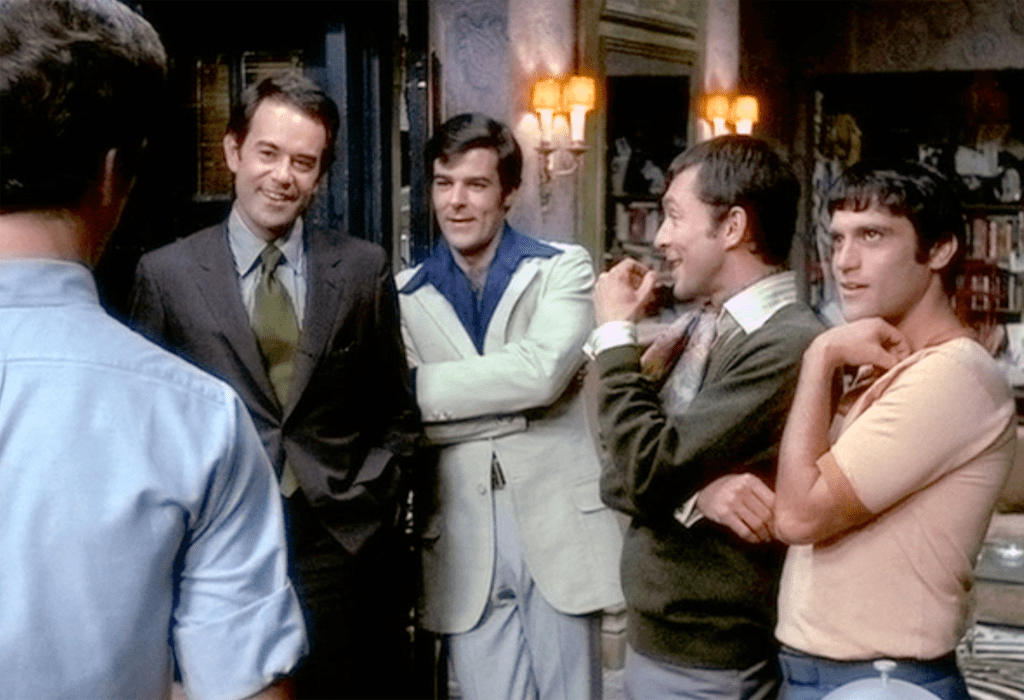
The Boys in the Band – Friedkin’s groundbreaking 1970 film adaptation of Mart Crowley’s off-Broadway play centers on a group of gay friends who have gathered to celebrate a birthday, and as the booze starts to flow, the fur begins to fly. It may not seem as “bold” or “daring” as perceived over 50 years ago (and many contemporary viewers will undoubtedly find certain stereotypes of the time to be problematic), but what the narrative reveals about human nature is universal and timeless.

It’s one of the best American dramas of the 1970s; a wicked verbal jousting match delivered by a crackerjack acting ensemble so finely tuned that you could set a metronome to the performances (Crowley adapted the screenplay). The production is also unique for enlisting the entire original stage cast to recreate their roles onscreen. Warning: Burt Bacharach’s “The Look of Love” will be playing in your head for days on end.

https://i0.wp.com/digbysblog.net/wp-content/uploads/2023/08/image-31.png?resize=1024%2C576&ssl=1

SorcererThe time is ripe for a re-appraisal of Friedkin’s expertly directed, terrifically acted update of Henri-Georges Clouzot’s classic 1953 noir, The Wages of Fear. This existential action adventure (which I think is closer in spirit to Herzog’s Aguirre, the Wrath of God than Clouzot’s original film) was greeted with indifference by audiences and critics when it was released in 1977. Maybe it was the incongruous title, which likely led many to assume it would be in the vein of his previous film (and box-office hit), The Exorcist. Then again, it was tough for any other film to garner attention in the immediate wake of Star Wars 

Roy Scheider heads a superb international cast as a desperate American on the lam in South America, who signs up for a job transporting a truckload of nitroglycerin through rough terrain. Excellent screenplay by Walon Green.  Tangerine Dream provides a memorable soundtrack. They don’t make ‘em like this anymore-a genuinely pulse-pounding adventure that slips in a fair amount of subversive political commentary. 

https://i0.wp.com/digbysblog.net/wp-content/uploads/2023/08/image-35-1024x538-1.png?w=1024&ssl=1

Killer Joe – This 2012 film is a blackly funny and deliriously nasty piece of late-career work from Friedkin. Jim Thompson meets Sam Shepherd (with a whiff of Tennessee Williams) in this dysfunctional trailer trash-strewn tale of avarice, perversion and murder-for-hire, adapted for the screen by Tracy Letts from his own play. While the noir tropes in the narrative holds few surprises, the squeamish are forewarned that the then-76 year-old Friedkin still had a formidable ability to startle unsuspecting viewers; proving you’re never too old to earn an NC-17 rating. How startling? The real litmus test occurs during the film’s climactic scene, which is so Grand Guignol that (depending on your sense of humor) you’ll either cringe and cover your eyes…or laugh yourself sick. (Full review)

https://i0.wp.com/digbysblog.net/wp-content/uploads/2023/08/image-32.png?resize=1024%2C514&ssl=1

To Live and Die in L.A. – Essentially a remake of The French Connection (updated for the 80s), Friedkin’s fast-moving, tough-as-nails 1985 neo noir ignites the senses on every level: visual, aural and visceral.

Leads William Peterson (as an obsessed treasury agent) and Willem Dafoe (as his criminal nemesis) rip up the screen with star-making performances (both were relative unknowns). While the narrative adheres to familiar “cop on the edge” tropes, there’s an undercurrent of weirdness throughout that makes this a truly unique genre entry (“The stars are God’s eyes!” Peterson’s girlfriend shrieks at him at one point, for no apparent reason). Friedkin co-adapted the screenplay with source novel author Gerald Petievich.

Friedkin’s hard-boiled L.A. story is painted in dusky orange, vivid reds and stark blacks; an ugly/beautiful noir Hell rendered by the late great cinematographer Robby Müller (who worked extensively with Wim Wenders and Jim Jarmusch). The icing on the cake is Wang Chung’s ace soundtrack, woven seamlessly into the narrative by Friedkin and editor M. Scott Smith. This sequence alone is worth the price of admission (not to mention a masterclass in editing…if not counterfeiting):

Up the Workers: A Top 10 List

By Dennis Hartley

(Originally posted on Digby’s Hullabaloo on July 15, 2023)

https://i0.wp.com/digbysblog.net/wp-content/uploads/2023/07/image-68.png?w=800&ssl=1

A GM I once worked for was fond of saying “everybody’s got two businesses…their own, and show biz” (usually under his breath after a meeting with one of our advertisers). It would be nice, but it is true that everybody can’t be a “star”…even for those whose only business is show biz. Take actors. This may be a difficult sell to the average working stiff, but not every person who acts for a living commands a 7-figure (or more) salary per-project; they’re living paycheck-to-paycheck like the rest of us.

In fact, out of the 160,000 members of the Screen Actors Guild/American Federation of Radio and Television Artists, only around 2% make a living from acting jobs. As you are likely aware, this past Thursday SAG-AFTRA joined the members of the Writers Guild of America on the picket lines (the WGA has been on strike now for several months). The last time this confluence occurred was in 1960. And this time out, the issues at hand are more …complex:

SAG-AFTRA and the major studios remain at odds on a dizzying array of issues, as film and TV actors hit the picket lines Friday for the first time since 1980.

According to sources on both sides, the biggest sticking point is the union’s demand for 2% of the revenue generated by streaming shows. The two sides also remain far apart on basic increases in minimum rates, with the studios offering 5%, 4% and 3.5% across the three years of the contract, while the union is demanding 11%, 4% and 4%.

But that only scratches the surface. The parties are at odds on dozens of issues, only a handful of which have been publicly reported.

In some cases, the two sides don’t even agree on what the disagreements are. They engaged in a rare public back-and-forth Thursday over the use of artificial intelligence to replicate background actors.

Duncan Crabtree-Ireland, the union’s executive director, alleged that the studios want to pay an extra for one day of work to be scanned, and then reuse that likeness forever. The Alliance of Motion Picture and Television Producers hotly disputed that, saying that its proposal explicitly limits the reuse to the project for which the extra was hired.

The Variety article delves deeper into the complexities; the bottom line is that a settlement may take some time. In the meantime, major studio movie and television productions have essentially ground to a halt. This work stoppage has far-reaching consequence, especially when you consider the on-set technicians and post-production personnel involved, not to mention service industry workers like janitors and caterers who all depend on the Hollywood machine for their living.

One interesting sidebar is how the tandem strikes are affecting a place located about a 2-hour drive from where I live… “Hollywood North”:

Rare twin strikes by Hollywood actors and film and television writers are casting a pall over British Columbia’s creative industry, which has become a hub for American film and TV production.

Known as “Hollywood North,” the Canadian province and the city of Vancouver comprise one of the largest production centers in North America, with more than 50 animation studios alone, employing up to 88,000 people, according to a provincial agency. It generated an estimated C$3.6 billion in revenue ($2.7 billion) in 2022.

Hollywood actors on Friday joined writers on the picket lines for the first time in 63 years. The unionized workers are demanding higher compensation in an era when streaming of movies and TV shows has reduced royalties for working-class actors.

Film production in British Columbia is down to “a trickle,” said Gemma Martini, Chair of the Motion Picture Production Industry Association and CEO of Martini Film Studios.

Creative BC, the government body responsible for promoting creative industries in the province, said in a statement it is “concerned for the workforce, companies, industry, and people.”

Since the 1990s, different levels of government have offered tax credits to the industry, adding to its appeal as a destination for movie production. Over the years, Vancouver, with its proximity to Los Angeles and prized locations, has emerged as an alternative hub for production and post-production activities, production executives said. […]

Reverberations that started on May 2 with the writers’ strike grew in British Columbia, where most productions have American components.

In a given week, British Columbia-based film location management company Location Fixer could have 15 active productions.

“Now,” said co-owner Synnove Godeseth, “we have zero.”

Godeseth estimates about 75% of her company’s business comes from U.S. productions. First the business was hit by the writers’ strike: “Because no scripts are being written, people aren’t coming to scout our locations.”

Now, the actors’ strike is taking a toll. Commercial shoots are helping – “that’s literally what’s keeping us afloat.”

Godeseth said she supports the striking workers “100%” and hopes for a swift resolution.

There are also reverberations rippling across the pond to the UK:

Among the productions in the UK that could be affected is Deadpool 3, starring Hollywood actors Ryan Reynolds and Hugh Jackman, who were recently pictured suited and booted for their roles. The third installment of the Marvel antihero film franchise was due out in May 2024 but the strike could now change things. […]

Overseas productions, like Paramount’s Gladiator sequel, starring Paul Mescal and Denzel Washington, are also expected to be affected.

The new Gladiator is shooting in Morocco and Malta – but with plenty of British crews working on the production team.

The strike also affects promotional activity. Upcoming releases due to hold promotional events like press junkets and red-carpet premieres include Disney’s Haunted Mansion (released 28 July), a new Teenage Mutant Ninja Turtles film (2 August), Sir Kenneth Branagh’s Agata Christie mystery A Haunting In Venice (15 September).

While writing for these projects is likely to be completed, the strike by performers will bring a stop to a large proportion of production work and cause havoc with scheduling. […]

Actors represented by SAG-AFTRA’s sister union, Equity, in the UK must continue to work as normal – the Hollywood strike does not apply to them.

Equity says “a performer joining the strike (or refusing to cross a picket line) in the UK will have no protection against being dismissed or sued for breach of contract by the producer”.

Even actors represented by both SAG-AFTRA and Equity may be required to work on projects being made in the UK, Equity said, due to UK employment laws.

In terms of TV, Warner Bros Discovery previously boasted about the minimal disruption of the writers’ strike to HBO projects like House of the Dragon series, filming in the UK, because scripts were complete.

Nonetheless, the strike by performers who are members of SAG-AFTRA means many fully written screenplays are now likely to be left sitting unused.

Series two of the Game of Thrones TV spin-off, with Matt Smith and Emma D’Arcy, could now face delays, as well as the second series of The Sandman, starring Tom Sturridge, and series four of Oscar-winner Gary Oldman’s Slow Horses.

It is believed side deals could be struck between guild performers and producers to enable certain projects to continue.

So many moving parts involved…here’s hoping this situation comes to a fair and equitable resolution. Meantime, in solidarity with SAG-AFTRA and WGA I am re-posting my 2022 Labor Day piece.

(Originally posted on Digby’s Hullabaloo on September 3, 2022)

https://i0.wp.com/digbysblog.net/wp-content/uploads/2023/07/image-67.png?w=780&ssl=1

Raise your glass to the hard-working people
Let’s drink to the uncounted heads
Let’s think of the wavering millions
who need leaders but get gamblers instead

-from “Salt of the Earth”, by Mick Jagger & Keith Richard

(Shame mode) Full disclosure. It had been so long since I had contemplated the true meaning of Labor Day, I had to refresh myself with a web search. Like many wage slaves, I simply view it as one of the 7 annual paid holidays offered by my employer (table scraps, really…relative to the other 254 weekdays I spend chained to a desk, slipping ever closer to the Abyss).

I’m not getting you down, am I?

Anyway, back to the true meaning of Labor Day. According to the U.S.D.O.L. website:

Labor Day, the first Monday in September, is a creation of the labor movement and is dedicated to the social and economic achievements of American workers. It constitutes a yearly national tribute to the contributions workers have made to the strength, prosperity, and well-being of our country.

By the way, Labor Day isn’t the sole “creation of the labor movement”. Next time you’re in the break room, check out the posters with all that F.L.S.A. meta regarding workplace rights, minimum wage, et.al. Perhaps I shouldn’t be so flippant about my “table scraps”, eh?

I have curated a Top 10 list of films that inspire, enlighten, or just give food for thought in honor of this holiest of days for those who make an honest living (I know-we’re a dying breed). So put your feet up, cue up a movie, and raise a glass to yourself. You’ve earned it.

https://i0.wp.com/digbysblog.net/wp-content/uploads/2022/09/image-10.png?resize=1024%2C550&ssl=1

Blue Collar– Director Paul Schrader co-wrote this 1978 drama with his brother Leonard. Richard Pryor, Harvey Keitel and Yaphet Kotto portray Motor City auto worker buddies tired of getting the short end of the stick from both their employer and their union. In a fit of drunken pique, they pull an ill-advised caper that gets them in trouble with both parties, ultimately putting friendship and loyalty to the test.

Akin to Elia Kazan’s On the Waterfront, Schrader subverts the standard “union good guy, company bad guy” trope with shades of gray, reminding us the road to Hell is sometimes paved with good intentions. Great score by Jack Nitzsche and Ry Cooder, with a memorable theme song featuring Captain Beefheart (“I’m jest a hard-woikin’, fucked-over man…”).

https://i0.wp.com/digbysblog.net/wp-content/uploads/2022/09/image-11.png?w=1000&ssl=1

El Norte – Gregory Nava’s portrait of Guatemalan siblings who make their way to the U.S. after their father is killed by a government death squad will stay with you after credits roll. The two leads deliver naturalistic performances as a brother and sister who maintain optimism, despite fate and circumstance thwarting them at every turn. Claustrophobes be warned: a harrowing scene featuring an encounter with a rat colony during an underground border crossing is nightmare fuel. Do not expect a Hollywood ending; this is an unblinking look at the shameful exploitation of undocumented workers.

https://i0.wp.com/digbysblog.net/wp-content/uploads/2022/09/image-12.png?w=1024&ssl=1

The Grapes of Wrath – John Ford’s powerful 1940 drama (adapted from John Steinbeck’s novel) is the quintessential film about the struggle of America’s salt of the earth during the Great Depression. Perhaps we can take comfort in the possibility that no matter how bad things get, Henry Fonda’s unforgettable embodiment of Tom Joad will “…be there, all around, in the dark.” Ford followed up with the Oscar-winning How Green Was My Valley (1941) another drama about a working class family (set in a Welsh mining town).
https://i0.wp.com/digbysblog.net/wp-content/uploads/2022/09/image-13.png?resize=1024%2C576&ssl=1

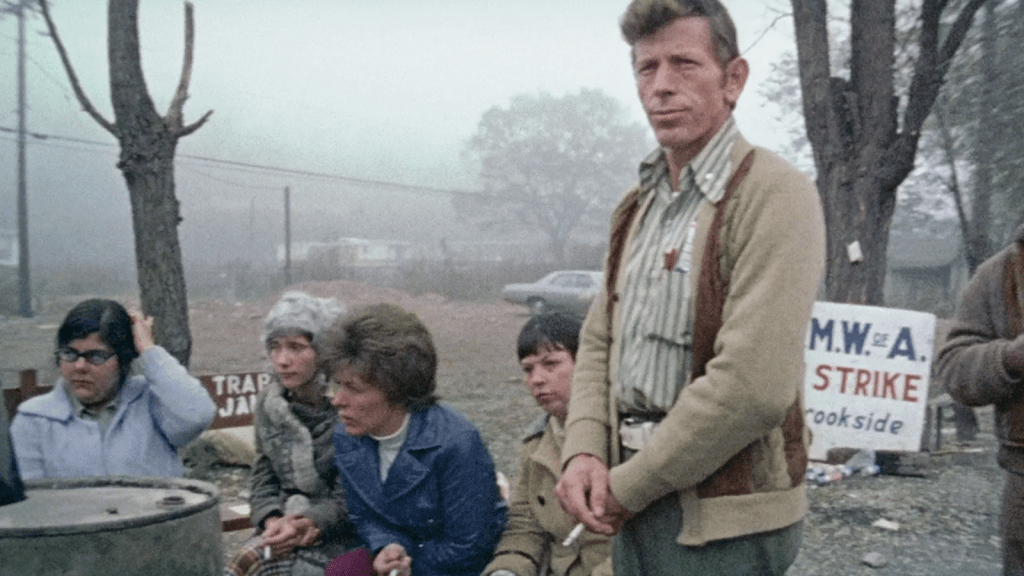
Harlan County, USA – Barbara Kopple’s award-winning film is not only an extraordinary document about an acrimonious coal miner’s strike in Harlan County, Kentucky in 1973, but is one of the best American documentaries ever made. Kopple’s film has everything that you look for in any great work of cinema: drama, conflict, suspense, and redemption. Kopple and crew are so deeply embedded that you may involuntarily duck during a harrowing scene where a company-hired thug fires a round directly toward the camera operator (it’s a wonder the filmmakers lived to tell this tale).

https://i0.wp.com/digbysblog.net/wp-content/uploads/2022/09/image-15.png?w=1000&ssl=1

Made in Dagenham – Based on a true story, this 2011 film (directed by Nigel Cole and written by William Ivory) stars Sally Hawkins as Rita O’Grady, a working mum employed at the Dagenham, England Ford plant in 1968. She worked in a run-down, segregated section of the plant where 187 female machinists toiled away for a fraction of what male employees were paid; the company justified the inequity by classifying female workers as “unskilled labor”.

Encouraged by her empathetic shop steward (Bob Hoskins), the initially reticent Rita finds her “voice” and surprises family, co-workers and herself with a formidable ability to rally the troops and affect real change. An engaging ensemble piece with a standout supporting performance by Miranda Richardson as a government minister.
https://i0.wp.com/digbysblog.net/wp-content/uploads/2022/09/image-16.png?w=704&ssl=1

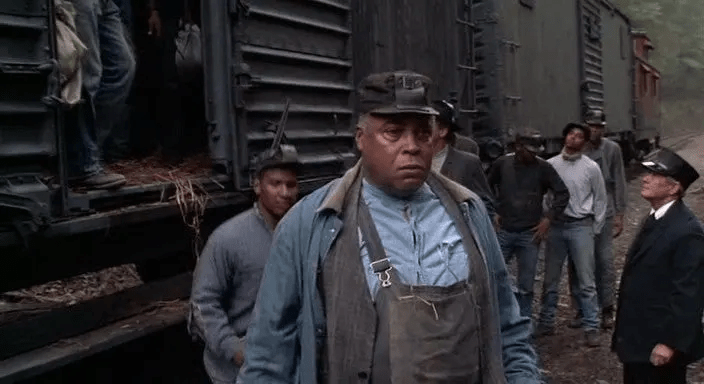
Matewan – This well-acted, handsomely mounted drama by John Sayles serves as a sobering reminder that much blood was spilled to lay the foundation for the labor laws we take for granted in the modern workplace. Based on a true story, it is set during the 1920s, in West Virginia. Chris Cooper plays an outsider labor organizer who becomes embroiled in a conflict between coal company thugs and fed up miners trying to unionize.

Sayles delivers a compelling narrative, rich in characterizations and steeped in verisimilitude (beautifully shot by Haskell Wexler). Fine ensemble work from a top notch cast that includes David Strathairn, Mary McDonnell, James Earl Jones, Joe Grifasi, Jane Alexander, Gordon Clapp, and Will Oldham. The film is also notable for its well-curated Americana soundtrack.

https://i0.wp.com/digbysblog.net/wp-content/uploads/2022/09/image-17.png?resize=1024%2C576&ssl=1

Modern Times – Charlie Chaplin’s 1936 masterpiece about man vs. automation has aged well. This probably has everything to do with his embodiment of the Everyman. Although referred to as his “last silent film”, it’s not 100% so. A bit of (sung) gibberish aside, there’s no dialogue, but Chaplin finds ingenious ways to work in lines (via technological devices). In fact, his use of sound effects in this film is unparalleled, particularly in a classic sequence where Chaplin, a hapless assembly line worker, literally ends up “part of the machine”. Paulette Goddard (then Mrs. Chaplin) is on board for the pathos. Brilliant, hilarious and prescient.

https://i0.wp.com/digbysblog.net/wp-content/uploads/2022/09/image-18.png?w=720&ssl=1

Norma Rae – Martin Ritt’s 1979 film about a minimum-wage textile worker (Sally Field) turned union activist helped launch what I refer to as the “Whistle-blowing Working Mom” genre (Silkwood, Erin Brockovich, etc).

Field gives an outstanding performance (and deservedly picked up a Best Actress Oscar) as the eponymous heroine who gets fired up by a passionate labor organizer from NYC (Ron Leibman, in his best role). Inspiring and empowering, bolstered by a fine screenplay (by Irving Ravetch and Harriet Frank, Jr.) and a great supporting cast that includes Beau Bridges, Pat Hingle and Barbara Baxley.

https://i0.wp.com/digbysblog.net/wp-content/uploads/2022/09/image-19.png?resize=1024%2C613&ssl=1

On the Waterfront – “It wuz you, Chahlee.” The betrayal! And the pain. It’s all there on Marlon Brando’s face as he delivers one of the most oft-quoted monologues in cinema history. Brando leads an exemplary cast that includes Rod Steiger, Lee J. Cobb, Karl Malden and Eva Marie Saint in this absorbing portrait of a New York dock worker who takes a virtual one-man stand against a powerful and corrupt union official. The trifecta of Brando’s iconic performance, Elia Kazan’s direction, and Budd Schulberg’s well-constructed screenplay adds up to one of the finest American social dramas of the 1950s.

https://i0.wp.com/digbysblog.net/wp-content/uploads/2022/09/image-20.png?resize=1024%2C615&ssl=1

Roger and Me – While our favorite lib’rul agitprop director has made a number of films addressing the travails of wage slaves and ever-appalling indifference of the corporate masters who grow fat off their labors, Michael Moore’s low-budget 1989 debut film remains his best (and is on the list of the top 25 highest-grossing docs of all time).

Moore may have not been the only resident of Flint, Michigan scratching his head over GM’s local plant shutdown in the midst of record profits for the company, but he was the one with the chutzpah (and a camera crew) to make a beeline straight to the top to demand an explanation. His target? GM’s chairman, Roger Smith. Does he bag him? Watch it and find out. An insightful portrait of working class America that, like most of his subsequent films, can be at once harrowing and hilarious, yet hopeful and humanistic.

Tribeca 2023: One Night With Adela (***)

By Dennis Hartley

(Originally posted on Digby’s Hullabaloo on June 17, 2023)

https://i0.wp.com/digbysblog.net/wp-content/uploads/2023/06/image-66.png?resize=1024%2C576&ssl=1

Volatile, coked to the gills and seething with resentment, Adela (Laura Galán) is wrapping up another dreary late-night shift tooling around Madrid in her street sweeper. However, the young woman’s after-work plans for this evening are anything but typical. She has decided that it’s time to get even…for every wrong (real or perceived) that she’s suffered in her entire life. Galán delivers a fearless and mesmerizing performance. Shot in one take (no editor is credited), writer-director Hugo Ruiz’s debut is the most unsettling portrayal of alienation, rage, and madness I have seen since Gaspar Noe’s I Stand Alone. Definitely not for the squeamish.

SIFF 2023: Retreat (***)

By Dennis Hartley

(Originally posted on Digby’s Hullabaloo on May 20, 2023)

https://i0.wp.com/digbysblog.net/wp-content/uploads/2023/05/image-94.png?resize=1024%2C576&ssl=1

Movie rule: If a father picks up his young son, whisks him to an isolated location (in this case, a family cabin in the mountains) and casually asks something to the effect of “So-what’s Mommy’s new boyfriend like?”- you know there is going to be a lot of brooding. And unease. Swiss writer-director Leon Schwitter’s impressive feature debut contains a lot of brooding and unease (I was reminded of Roger Donaldson’s Smash Palace). The lovely Alpine setting belies a creeping dread. With two actors carrying the film, the story simmers on a slow boil, but nonetheless keeps you glued to the screen.

SIFF 2023: L’immensità (***1/2)

By Dennis Hartley

(Originally posted on Digby’s Hullabaloo on May 13, 2023)

https://i0.wp.com/digbysblog.net/wp-content/uploads/2023/05/image-49.png?resize=1024%2C576&ssl=1

Emanuele Crialese’s semi-autobiographical drama about a dysfunctional family (set in 1970s Rome) combines the raw emotion of John Cassavetes’ A Woman Under the Influence with the sense memory of Fellini’s Amarcord. Penélope Cruz portrays a woman in a faltering marriage struggling to hold it together for the sake of her three children, to whom she is fiercely and unconditionally devoted. Her teenage daughter Edri identifies as a boy named “Andrea” (much to the chagrin of her abusive father). Buoyed by naturalistic performances, beautiful cinematography (by Gergely Pohárnok) and a unique 70s Italian pop soundtrack.

SIFF 2023: Midnight Cowboy (****)

By Dennis Hartley

(Originally posted on Digby’s Hullabaloo on May 13, 2023)

https://i0.wp.com/digbysblog.net/wp-content/uploads/2023/05/image-51.png?w=1024&ssl=1

“I’m WALKIN’ heah!” Aside from its distinction as being the only X-rated film to earn Oscars, John Schlesinger’s groundbreaking, idiosyncratic 1969 character study Midnight Cowboy (one of three special archival presentations at this year’s SIFF) also ushered in an era of mature, gritty realism in American film that flourished from the early to mid-1970s. The film was Schlesinger’s first U.S.-based project; he had already made a name for himself in his native England with films like A Kind of Loving, Billy Liar, Darling, and Far From the Madding Crowd.

Dustin Hoffman has seldom matched his character work here as Ratso Rizzo, a homeless New York City con artist who adopts country bumpkin/aspiring male hustler Joe Buck (Jon Voight) as his “protégé”. The two leads are outstanding, as is the supporting cast, which includes John McGiver, Brenda Vaccaro, Barnard Hughes and a teenage Bob Balaban. Also look for cameos from several of Warhol’s “Factory” regulars in a memorable party scene.

In hindsight, the location filming provides a fascinating historical document of the seedy milieu that was “classic” Times Square (New York “plays itself” very well here). Schlesinger won an Oscar for Best Director, as did Waldo Salt for his screenplay.

SIFF 2023: Lonely Castle in the Mirror (***)

By Dennis Hartley

(Originally posted on Digby’s Hullabaloo on May 13, 2023)

https://i0.wp.com/digbysblog.net/wp-content/uploads/2023/05/image-48.png?w=768&ssl=1

The Breakfast Club meets Alice in Wonderland in Keiichi Hara’s anime, adapted from Mizuki Tsujimura’s novel. Seven middle-school students (all misfits) are given access to a magic castle via their mirrors. Once there, a “wolf girl” informs them the first to find a hidden key will be granted one wish. As they become acquainted, they become less competitive and more empathetic toward each other. Overlong for a simple narrative, but a lovely message for kids.

SIFF 2023: Chile ’76 (***)

By Dennis Hartley

(Originally posted on Digby’s Hullabaloo on May 13, 2023)

https://i0.wp.com/digbysblog.net/wp-content/uploads/2023/05/image-45.png?resize=1024%2C576&ssl=1

Echoes of Graham Greene’s The Honorary Consul permeate this examination of the moral, ethical, and political dilemmas presented by life in a totalitarian society. Set in 1976 during the dictatorship of Augusto Pinochet, actress Manuela Martelli’s debut feature (co-written with Alejandra Garcia) centers on a bourgeois Chilean woman (Aline Küppenheim).

Although she trained as a nurse at med school, she has opted to let her physician husband bring home the bacon. Busying herself by taking care of their luxurious beachfront home and doing volunteer work for her church, she is largely sheltered from the harsh realities of the regime. However, when her priest talks her into helping a wounded rebel, she gets a crash-course in what life is really like for the less fortunate and begins to question her personal priorities. Deliberate pacing and an abrupt, ambiguous dénouement may be trying for some, but the film is well-directed and acted.