Category Archives: On Pop Culture

Michael Crichton: A Top 5 List

By Dennis Hartley

(Originally posted on Digby’s Hullabaloo on November 8, 2008)

http://3.bp.blogspot.com/-RuOF9utPEp0/TWPSpXUQYbI/AAAAAAAAGY8/5uI39QMejpY/s1600/westworld5.jpg

I’m sure that you’ve heard the news about Michael Crichton’s passing. The prolific, Harvard-educated MD turned science fiction author/screenwriter/director/producer (and yes, yes, I know…global warming denier…but nobody’s perfect) invented the “techno-thriller” genre. He was the master of the science-gone-amuck/chaos theory narrative, a theme that informed his best books and screenplays. Crichton’s novels have become synonymous with edge of your seat thrills and nail-biting suspense, tempered with detailed and (mostly) plausible science. He also created  the TV drama  ER. He also has an impressive film legacy;  here’s my Top 5 picks:

https://cdn.vox-cdn.com/thumbor/c_h9Va4b9M1eVapbNlSKarT5_Wg=/0x0:1920x1080/1200x800/filters:focal(991x143:1297x449)/cdn.vox-cdn.com/uploads/chorus_image/image/52218383/westworldcover.0.jpeg

Westworld-This 1973 cult favorite marked Crichton’s first foray into film directing, and it shows. But the film has two very strong suits in its favor: Crichton’s taut, sharply written screenplay and Yul Brenner’s memorable performance as a psychotic android gunslinger (the original Terminator!). James Brolin and Richard Benjamin also have an appealing on-screen chemistry, which livens things up (although Benjamin is an odd choice as an action hero). The “amusement park attractions killing the tourists” concept was an obvious warm up for Jurassic Park. Brenner would later reprise his role in the dicey 1976 sequel, Futureworld (watch at your own risk).

Image result for jurassic park 1993

Jurassic Park-Crichton adapted the screenplay from his own original novel (with assistance from David Koepp) for this Steven Spielberg blockbuster. Years of re-watching on the home screen may have diminished the visceral thrill of the cinematic artistry in several key scenes (the unforgettable T. Rex attack in the driving rainstorm, for starters) but this film undeniably remains a groundbreaking affair; thanks to the impressive pool of talent involved. My favorite line: “Must go faster.” Director Spielberg, Crichton and Koepp reunited for the sequel, The Lost World: Jurassic Park; while the special effects were impressive, it was a relatively tepid rehash of the previous.

http://notonbluray.com/blog/wp-content/uploads/2014/03/Andromeda-Strain-iTunes-3.png

The Andromeda Strain-What’s the scariest monster of them all? The one you cannot see. This 1971 Robert Wise film is the most faithful Crichton book-to-screen adaptation. A team of scientists race the clock to save the world from a deadly virus from outer space that reproduces itself at alarming speed. With its claustrophobic atmosphere (all the scientists are  trapped in a sealed underground laboratory until they can find a way to destroy the microbial “intruder”) it could be seen as a precursor to Alien. It’s a nail-biter from start to finish. Nelson Gidding adapted the script from Crichton’s novel. The 2008 TV movie version was a real snoozer.

https://www.rebeatmag.com/wp-content/uploads/TMBnr.jpg

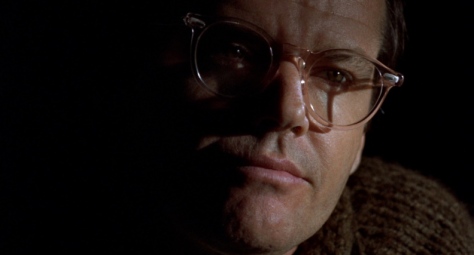
The Terminal Man-Paging Dr. Jekyll! George Segal is excellent in the lead as a gifted computer scientist who has developed a neurological disorder which triggers murderously psychotic blackout episodes. He becomes the guinea pig for an experimental cure that requires a microchip to be planted in his brain to circumvent the attacks.

Although it’s essentially “sci-fi”, this 1974 effort shares some interesting characteristics with the post-Watergate paranoid political thrillers that all seemed to propagate around that same time (especially The Parallax View, which also broached the subject of mind control). Director Mike Hodges (who directed the original version of Get Carter) adapted his screenplay from Crichton’s novel.

https://thewolfmancometh.files.wordpress.com/2011/05/twister-movie-jan-de-bont-car-barn-destruction.jpg

Twister-I admit, I went into the theater with low expectations, but this 1996 popcorn adventure about storm chasers tearing through Tornado Alley turned out to be quite the guilty pleasure. Crichton co-scripted with Anne-Marie Martin.

The film doesn’t have any threatening reptiles or rogue androids, and the science isn’t as complex as the typical Crichton story, but some of his signature themes are there (the violent unpredictability of a tornado-there’s your “chaos theory” at work).

Also, note that the protagonists (Bill Paxton and Helen Hunt) have the same dynamic as Sam Neill and Laura Dern’s scientist couple in Jurassic Park. Action director Jan de Bont (Speed, Lara Croft Tomb Raider) isn’t a very deep filmmaker, but he certainly knows how to deliver a slam-bang cinematic thrill ride.

Also worth a peek: The 13th Warrior, Sphere, Disclosure, Rising Sun, Looker, Coma.

Goodbye, Mr. Pollack

By Dennis Hartley

(Originally posted on Digby’s Hullabaloo on May 31, 2008)

http://cineplex.media.baselineresearch.com/images/125856/125856_full.jpg

I’m sure you have heard by now that we lost director-producer-actor Sydney Pollack earlier this week.

He was one of the last of the old school Hollywood filmmakers; a dependable “all purpose” director in the Michael Curtiz vein. From westerns (Jeremiah Johnson, The Scalphunters) and war films (Castle Keep) to love stories (The Way We Were, This Property is Condemned) and sweeping epics (Out of Africa, Havana) Pollack displayed a knack for effortless genre-hopping.

He may not have been an “auteur” or a flashy visual stylist, but he knew how to tell a damn fine story, and he always did so with intelligence and class. He respected his actors; you could glean that from the full-blooded performances that usually informed a Pollack film. Perhaps this was not surprising, as Pollack spent substantial time in front of the cameras as well, usually in supporting roles.

As an actor, he was most recently seen in Michael Clayton (which he also co-produced). He received critical raves for his acting in Woody Allen’s Husbands and Wives (and deservedly so-he more than managed to hold his own opposite the formidable talents of the great Judy Davis). His relatively small role in Eyes Wide Shut was one of the few high points in Stanley Kubrick’s  disappointing final  film.

Perhaps his most endearing turn as an actor was when Pollack the director gave himself a plum supporting role in his gender-fluid rom-com Tootsie. Pollack played the exasperated agent of a difficult and mercurial actor (Dustin Hoffman, who some might say was basically playing himself) and got to deliver a now classic line: “I begged you to get some therapy!” While Pollack’s most audience-pleasing film, I don’t necessarily consider Tootsie his best.

Beginning with his 1993 legal thriller The Firm, Pollack’s films began to slouch more toward “product” than artifice (with the exception of his 2005 documentary, Sketches of Frank Gehry). All in all, however, he left behind an impressive legacy of well-crafted cinema in his nearly 50 year long career. A few personal recommendations:

http://www.rowthree.com/wp-content/uploads/2010/01/theyshoothorses01.jpg

They Shoot Horses, Don’t They?-This richly decadent allegory about the human condition has to be one of the grimmest and most cynical films ever made. Pollack assembled a crack ensemble for this depiction of a Depression-era dance marathon from Hell: Jane Fonda, Gig Young (who snagged a Best Supporting Actor Oscar), Susannah York, Bruce Dern and Red Buttons are all outstanding; Pollack even coaxed the usually wooden Michael Sarrazin (the Hayden Christensen of his day) into showing real emotion.

https://le0pard13.files.wordpress.com/2011/07/yakuza-duo.jpg?w=492

The Yakuza-I was happy when this 1975 sleeper finally got released on DVD. Robert Mitchum and Ken Takakura are excellent in this complex culture clash/gangster drama. Pollack had major writing talent on board-Robert Towne and Paul Schrader (who scripted from a story idea by Schrader’s brother Leonard).

https://4.bp.blogspot.com/_qeg1OcClj7U/S1wBkNENUfI/AAAAAAAACvc/n_YDe1Gece0/s1600/3days1.jpg

Three Days of the Condor-One of seven collaborations between star Robert Redford and director Pollack, and one of the seminal “conspiracy-a-go-go” films An absolutely first-rate thriller with more twists and turns than you can shake a dossier at. The film’s final scene plays like an eerily prescient prologue for All the President’s Men, which wasn’t released until the following year. The cast includes Faye Dunaway, Max von Sydow, Cliff Robertson, and John Houseman. Lorenzo Semple Jr. and David Rayfiel adapted from James Grady’s novel Six Days of the Condor.

http://images4.static-bluray.com/reviews/5060_1.jpg

Absence of Malice-Before it was fashionable to take the news media to task, Pollack delivered this solid blend of morality tale and civics lesson about the straight arrow son of a mob figure (Paul Newman) whose reputation is sullied when he becomes the fall guy in an unethical federal prosecutor’s investigation. An over-eager newspaper journalist (Sally Field) is no help, with her tendency to print first, and fact check later. Newman ingeniously turns the tables on the mudslingers, whilst putting the average citizen’s alleged protection under the libel laws to the test. Scripted by ex-reporter Kurt Luedtke, and also featuring wily scene-stealer Wilford Brimley.

http://prettycleverfilms.com/files/2013/04/6a00d8345157d269e200e54f6f5c9d8834-640wi.jpg

The Swimmer-Technically, this film is not a 100% Pollack project; Frank Perry is the credited director, but Pollack was brought in to finish after Perry dropped out during production. Eleanor Perry scripted from the original John Cheever short story. At any rate, the end product  remains an underrated gem. A searing performance from Burt Lancaster fuels this existential suburban nightmare.

Tough guys don’t dance: R.I.P. Norman Mailer

By Dennis Hartley

(Originally posted on Digby’s Hullabaloo on November 10, 2007)

https://www.salon.com/app/uploads/2022/01/norman-mailer-0105221.jpg

You’ve likely heard by now that Norman Mailer has passed on. I’ll let the literary critics debate his legacy as an author, but I feel duty-bound to recommend a couple of memorable films that Mailer had a hand in creating.

https://consideringstories.wordpress.com/wp-content/uploads/2021/09/tough-guys-dont-dance-still.jpg

Believe it or not, Mailer had four films to his credit as a director. I can’t speak for Beyond the Law (1968), Wild 90 (1968), or Maidstone (1970) because I’ve never seem them (they’re pretty obscure and currently unavailable ), but Mailer’s fourth and final directorial effort, from 1987, happens to be one of my personal cult favorites.

If “offbeat noir” is your thing, Tough Guys Don’t Dance is your kind of film. Ryan O’Neal plays an inscrutable ex-con with a conniving “black widow” of a wife, who experiences five “really bad days” in a row, involving drugs, kinky sex, blackmail and murder. Due to temporary amnesia, however, he’s not sure of his own complicity (O’Neal begins each day by writing the date on his bathroom mirror with shaving cream-keep in mind, this film precedes Memento by 13 years.)

Veteran noir icon Lawrence Tierny (cast here 5 years before Tarantino resurrected him for Reservoir Dogs) is priceless as O’Neal’s estranged father, who is helping him sort out events (it’s worth the price of admission to hear Tierny bark “I just deep-sixed two heads!”).

Equally notable is a deliciously demented performance by B-movie trouper Wings Hauser as the hilariously named Captain Alvin Luther Regency. Norman Mailer’s “lack” of direction has been duly noted, but his minimalist style works, giving this film a David Lynch feel (that could  be due to the fact that Isabella Rossilini co-stars and the soundtrack was composed by Lynch stalwart Angelo Badalamenti).

I would also recommend The Executioner’s Song. A star-making turn from Tommy Lee Jones helped make this dramatization of the Gary Gilmore case one of the best “made for TV” films. Mailer adapted the teleplay from his own book (both of these titles available on DVD).

Death of a Lens man: R.I.P. Laszlo Kovacs

By Dennis Hartley

(Originally posted on Digby’s Hullabaloo on September 8, 2007)

https://theasc.com/wp-content/uploads/2026/04/Kovacs-Easy-Rider-2.jpg

You know what “they” say- it always comes in threes. We recently lost two masters of world cinema, Ingmar Bergman and Michelangelo Antonioni. Then, on July 21, we lost someone with a bit less name recognition but no less importance. I am referring to one of American cinema’s most respected and influential cinematographers, Laszlo Kovacs. This week, we’ll take a look at some “must see” films from this craftsman’s prolific 50-year career.

Kovacs’ journey to the United States from his native Hungary plays like a nail-biting Cold War thriller. When the Hungarian Revolution exploded on the streets of Budapest in 1956, the young Kovacs, together with fellow student Vilmos Zsigmond, boldly documented the ensuing events with a hidden camera (on loan from their school).

The budding film makers then risked life and limb to smuggle the resulting 30,000 feet of footage across the Austrian border. Both men subsequently sought and won political asylum in the U.S. in 1957. (BTW, there is a forthcoming documentary entitled Laszlo & Vilmos: The Story of Two Refugees Who Changed the Look of American Cinema). The cinematography style of Kovacs and Zsigmond was quite literally borne from revolution; and it certainly revolutionized American cinema in the 1970’s with a signature “look”.

I’m not sure what his feelings were about this (or if he even cared), but in the course of his long and illustrious career, it’s interesting that Kovacs never once snagged an Oscar (although he was nominated a few times). His friend Zsigmond fared better with the Academy; likely because to tended to work on higher profile films, whilst Kovacs gravitated more toward artistic and/or independent projects (at least through the period leading up to Ghostbusters, the biggest box office hit he ever collaborated on).

Ironically, the final film that Kovacs is credited on prior to his death was a 2006 project with his old friend Zsigmond, a documentary that was produced to commemorate the 50th anniversary of the Hungarian Revolution called Torn from the Flag. In an artistic sense, you could say that he came full circle.

For additional back story on the American film renaissance of the 1970’s, I highly recommend the documentary Easy Riders, Raging Bulls: How the Sex, Drugs and Rock ‘n’ Roll Generation Saved Hollywood (Kovacs is a featured interviewee.)

Here’s a  sampler of cinematic gems from Kovacs’ resume:

https://assets.mubicdn.net/images/film/3690/image-w1280.jpg?1745489584

Targets (1968)-Peter Bogdanovich created a minor classic with this impressively assured directorial debut; a low-budget wonder about an aging horror movie star (Boris Karloff, not a stretch) who is destined to cross paths with a “nice” young man (a Vietnam vet) who is about to go Charles Whitman on his sleepy community. It holds up well, as it is (sadly) quite prescient. Chilling and effective. The film marked the first of several collaborations between the director and cinematographer Kovács. Bogdanovich co-wrote the script with (his then-wife) producer/production designer Polly Platt, and Samuel

https://d1e00ek4ebabms.cloudfront.net/production/d816a803-1e74-4faa-98e7-94e63384a489.jpg

Easy Rider (1969)-Dennis Hopper’s groundbreaking directorial debut also put Kovacs on the map. The dialogue (along with the mutton chops, fringe vests and love beads) may not have dated so well, but thanks to Kovacs’ exemplary DP work, those now iconic images of expansive American landscapes and the endless gray ribbons that traverse them remain the quintessential touchstone for all the American “road” movies that have followed in its wake.

http://4.bp.blogspot.com/-NziEXFPJ_d0/VakBBltIhOI/AAAAAAAAHOA/S4gk1AgiFAw/w1200-h630-p-k-no-nu/5ep-traffic.png

Five Easy Pieces (1970)-“You see this sign?!” Easy Rider collaborators Kovacs, director Bob Rafelson and star Jack Nicholson were reunited for one of  the defining road movies of the 70’s. Nicholson fully realized the iconic “Jack” persona in this character study about a disillusioned, classically-trained piano player from a moneyed family, working a soulless blue-collar job and teetering on the verge of an existential meltdown. Karen Black contributes outstanding support as his long-suffering waitress girlfriend. Kovacs makes excellent use of the verdant, rain-soaked milieu of the Pacific Northwest. No substitutions!

https://irp.cdn-website.com//c100d4ee/dms3rep/multi/opt/doc05-640w.jpg

What’s Up, Doc? (1972)- Peter Bogdanovich’s 1972 film is a love letter to classic screwball comedies of the 30s and 40s (the most obvious influence being Bringing Up Baby). Ryan O’Neal and Barbara Streisand have wonderful chemistry as the romantic leads, who meet cute and become involved in a hotel mix-up of four identical suitcases that rapidly snowballs into a series of increasingly preposterous situations for all concerned (as occurs in your typical screwball comedy).

The screenplay was co-written by Buck Henry, David Newman and Robert Benton. The fabulous cast includes Madeline Kahn, Kenneth Mars, Austin Pendleton and Michael Murphy. In his second collaboration with the director, cinematographer Kovács works his usual magic with the San Francisco locale.

https://hopeliesat24framespersecond.files.wordpress.com/2011/01/800_king_marvingardens_blu-ray_1.jpg

The King of Marvin Gardens (1972)-The Rafelson-Nicholson-Kovacs triumvirate hits yet another one out of the park in this intense neo-noir character study about a cynical radio talk show host (Nicholson) who attempts to save his low-life con artist brother (Bruce Dern) from himself, only to become embroiled in one of his sleazy schemes. Ellen Burstyn gives one of the best performances by an actress ever, period. Kovacs expertly wrings every possible drop of noir atmosphere from the grim, gray Atlantic City locale. A brilliant work of art, any way you slice it. They don’t make ‘em like this anymore.

https://miro.medium.com/v2/1*knNzAV_fOS-I8ek9xne0bA.jpeg

Paper Moon (1973)- Two years after The Last Picture Show, director Peter Bogdanovich had the audacity to shoot yet another B&W film-which was going against the grain by the early 70s. This outing, however, was not a bleak drama. Granted, it is set during the Great Depression, but has a much lighter tone, thanks to precocious 9 year-old Tatum O’Neal, who steals every scene she shares with her dad Ryan (which is to say, nearly every scene in the film).

The O’Neals portray an inveterate con artist/Bible salesman and a recently orphaned girl he is transporting to Missouri (for a fee). Along the way, the pair discover they are a perfect tag team for bilking people out of their cookie jar money. Entertaining road movie, with the built-in advantage of a natural acting chemistry between the two leads.

Also on hand: Madeline Kahn (wonderful as always), John Hillerman, P.J. Johnson, and Noble Willngham. Ace DP Kovács is in his element; he was no stranger to road movies (Easy Rider, Five Easy Pieces). Alvin Sargent adapted his screenplay from Joe David Brown’s novel, “Addie Pray”.

http://1.bp.blogspot.com/-btxhvMnezv4/VAAD3hbFSvI/AAAAAAAAAUI/f0OevdIuUTk/s1600/shampoo_warren_beatty_laszlo_kovacs.jpg

Shampoo (1975)-Sex and politics (and more sex) are mercilessly skewered, along with the shallow SoCal lifestyle in Hal Ashby’s classic satire. Warren Beatty (who co-scripted with Robert Towne) plays a restless, over-sexed hairdresser with commitment “issues” (Oy, having to choose one “favorite” between Lee Grant, Goldie Hawn and Julie Christie would give anyone such tsuris!)

Beatty allegedly based his character on his close friend (and hairdresser to the stars) Jay Sebring, one of the victims of the grisly Tate-LaBianca slayings in 1969. This was one of the earliest films to step back and satirize the 60’s counterculture zeitgeist with the hindsight of historical detachment. Kovacs gives the L.A. backdrop an appropriately soft, gauzy look that perfectly matched the protagonist’s fuzzy approach to dealing with adult responsibilities.

https://static.tcm.com/tcm/files/default_images/77563.jpg?w=1200

Heart Beat (1980)-John Byrum’s slightly flawed but fascinating take on the relationship between beat writer Jack Kerouac (John Heard), Carolyn Cassady (Sissy Spacek) and Neal Cassady (Nick Nolte) over a 20-year period. A well-acted character study, with great work by Kovacs.

https://jessycap.files.wordpress.com/2016/03/tumblr_nk1joxbhyf1r1wi9ro1_1280.png

Frances (1982)-The sad story of how the bright, headstrong and politically outspoken actress Frances Farmer transitioned from a promising young Hollywood starlet in the 1940’s to a lobotomized mental patient, dying in near-obscurity is dramatized in this absorbing biopic from director Graeme Clifford. Jessica Lange throws herself into the role with complete abandonment, providing a compelling impetus for staying with this otherwise overlong film. Kovacs drenches this dark, tragic tale with a gothic atmosphere.

https://yts.ag/assets/images/movies/shattered_1991/large-screenshot3.jpg

Shattered (1991)-Kovacs teamed up with action director Wolfgang Petersen for this Hitchcockian tale of a man attempting to piece his life back together after suffering amnesia following a serious auto accident (or was it an accident?). Granted, this plot has been done to death, but the attractive leads (Tom Berenger and Greta Scacchi steam up the screen), taut direction and the dynamic lens work by Kovacs make it a worthwhile watch.

Whacking philosophical: The Sopranos coda

By Dennis Hartley

(Originally posted on Digby’s Hullabaloo on June 10, 2007)

https://www.econlib.org/wp-content/uploads/2019/04/sopranos.jpg

Well, this is it. After tonight, no more Sunday night dinners with Tony, Carmela and the, erm, Family (Hmmm…maybe no more Tony-we’ll know definitively by 10pm Eastern).

Whatever happens tonight on the series finale of HBO’s The Sopranos, one thing we can count on is this: It’s not likely to resemble M*A*S*H: The Final Episode (with the possible exception of the gunshot traumas). Let’s just say I don’t foresee a lot of hugging.

This mash-up of The Honeymooners with I, Claudius was a stroke of genius, and we probably will not see its like again anytime soon. Love it or hate it, David Chase’s epic mob drama has changed the formula of what constitutes a “hit series” and upped the ante considerably on TV drama in general. A 48 minute story arc just won’t cut it any more.

The Sopranos has weathered many storms since its 1999 debut, from initial accusations that the show was only serving to reinforce the Italian-American gangster stereotype, to a sophomore slump (Chase allegedly endured a paralyzing creative block getting the much-delayed and grumpily received fourth season underway), and most recently suffering a dramatic drop-off in viewership.

But despite the vacillating loyalty by viewers, the outcries from the PC police regarding stereotypes, sex and violence, and all the fan boys hand wringing themselves silly online over who shouldn’t have been whacked and who deserves to be whacked, one thing about the show has remained consistent. The directing, writing and acting has been, hands down, some of the best I have seen in any medium, whether it be network TV, cable or film. The Sopranos deserves every Emmy it has received and more, and I miss it already.

So what are we going to watch now on HBO Sunday nights? John from Cincinnati?! I hate it already. Somehow, the idea of a show centered on a philosophical surfer dude by the creators of Deadwood isn’t exactly grabbing me (why don’t they just call it “Driftwood”-because that’s all it’s going to be in the wake of The Sopranos, IMHO).

And the biggest question of all-what’s James Gandolfini going to do now? Will he face the “Spock” curse of being so indelibly linked with one particular television character that he can never be taken seriously in any other role? Well, maybe he could look to Bill Shatner for inspiration… wait a minute…that’s it!

Picture if you will: later tonight, after the final episode has been put to bed, Denny Crane and Tony Soprano are sitting on the balcony, enjoying their well-earned scotch and cigars. Denny turns to Tony and says reassuringly, “Don’t worry, Tone. There’s life after a cult series. Seriously.” Tony raises his glass, and with a sparkle in his eye, says: “Sleepover tonight?” To which Denny replies: “You don’t mean…’with the fishes’, do you?” Both men laugh and clink glasses.

(Music up, fade to black.) Adieu, Tony. Adieu.